By Brianna Wallen
News Editor
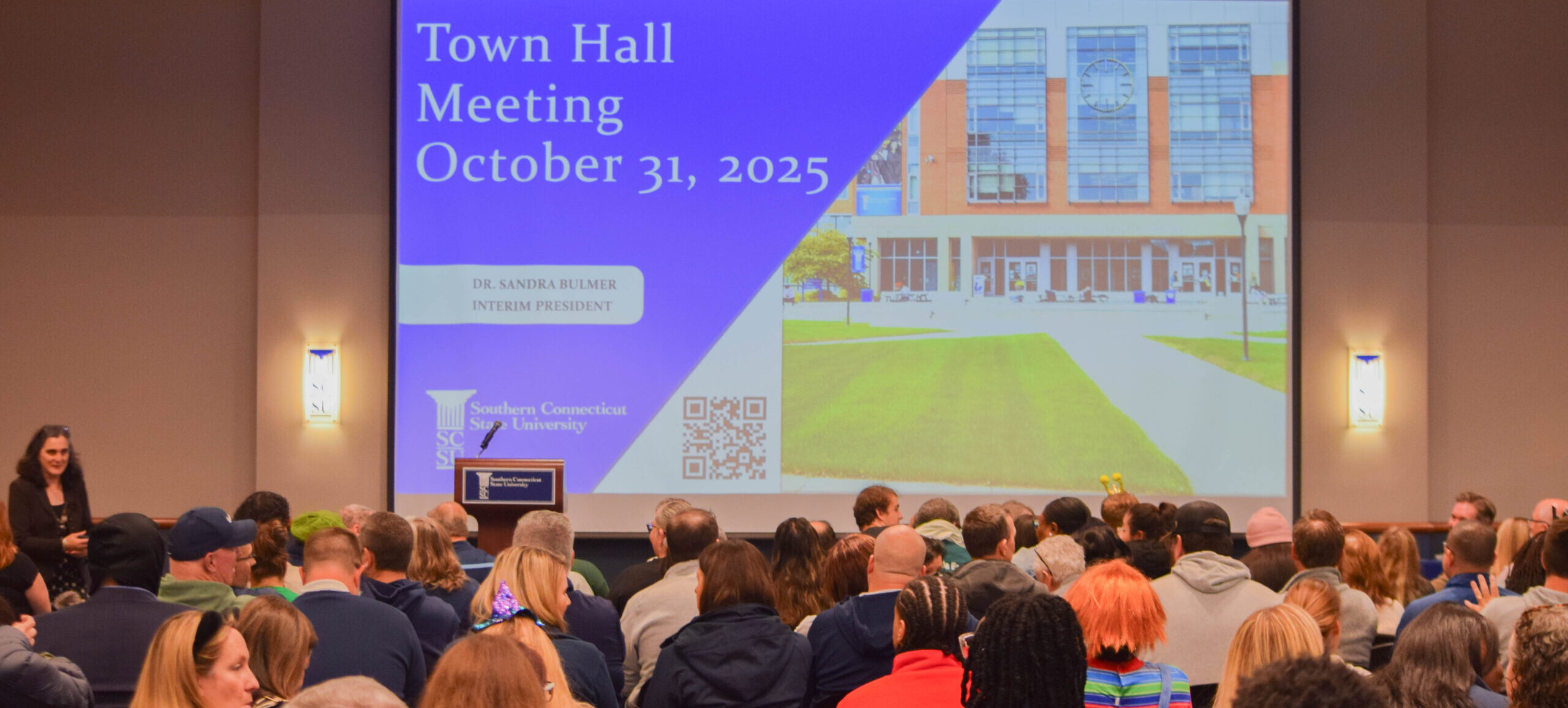
The Adanti Student Center Ballroom buzzed with conversation on Friday, Oct. 31, as Interim President Sandra Bulmer hosted a campus-wide town hall.
The forum invited open conversation about university priorities, student experience and upcoming initiatives, with a Q&A session giving the audience an opportunity to ask insightful questions.
“It’s not going to be the kind of town halls that I’ve sat through for 26 years,” Bulmer said. “I was thinking a little bit about being in your seat and what that’s felt like over the years. So, I thought, let me try to give you a sense of what’s going on in administration because a lot of what we do every day affects you.”
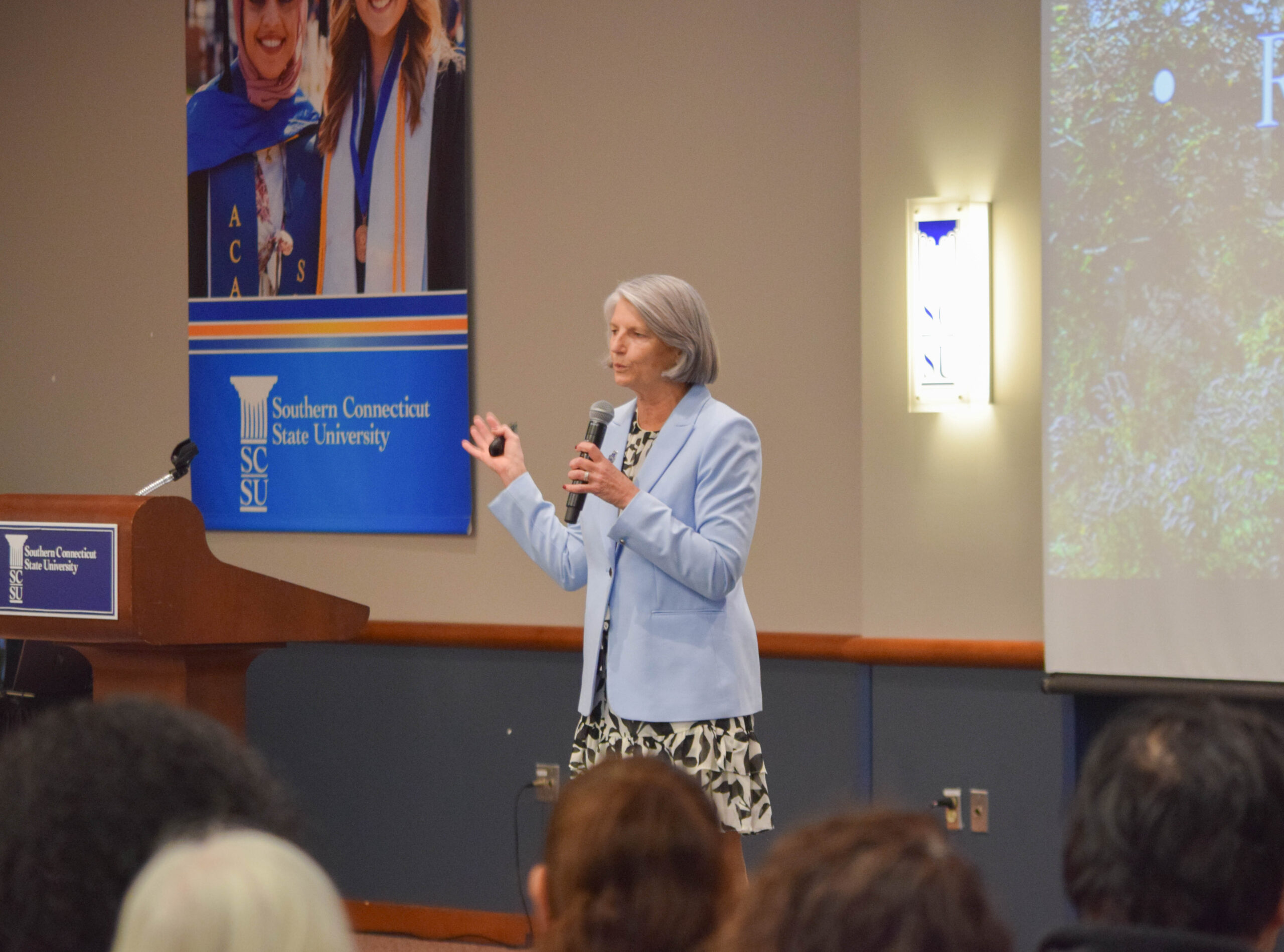
Bulmer opened the discussion by emphasizing openness and transparency, as she reflected on her experiences in her new role while offering insight into the university’s budget, current challenges and the work being done to address them.
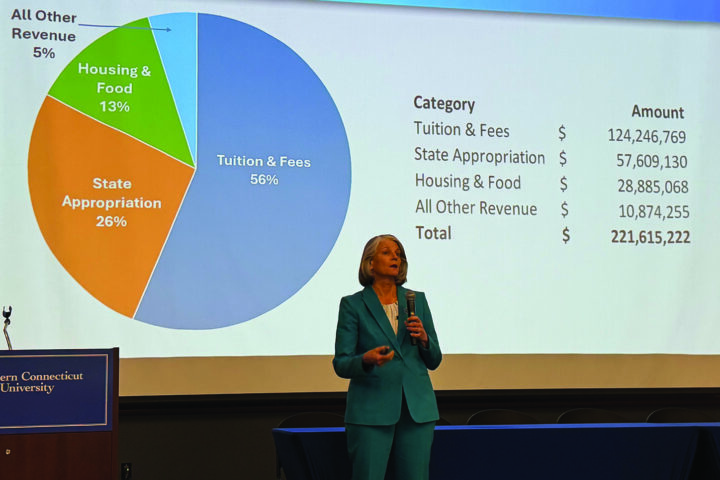
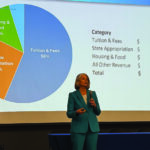
After sharing an overview of the institution’s $217 million operating cost, she broke down the university’s expenses and explained that the majority of funds go toward the people who allow the university to operate.
“Seventy-one percent is paying our people,” Bulmer said. “Our people are our product. That’s what we’re selling: the expertise, the services, everything you do.”
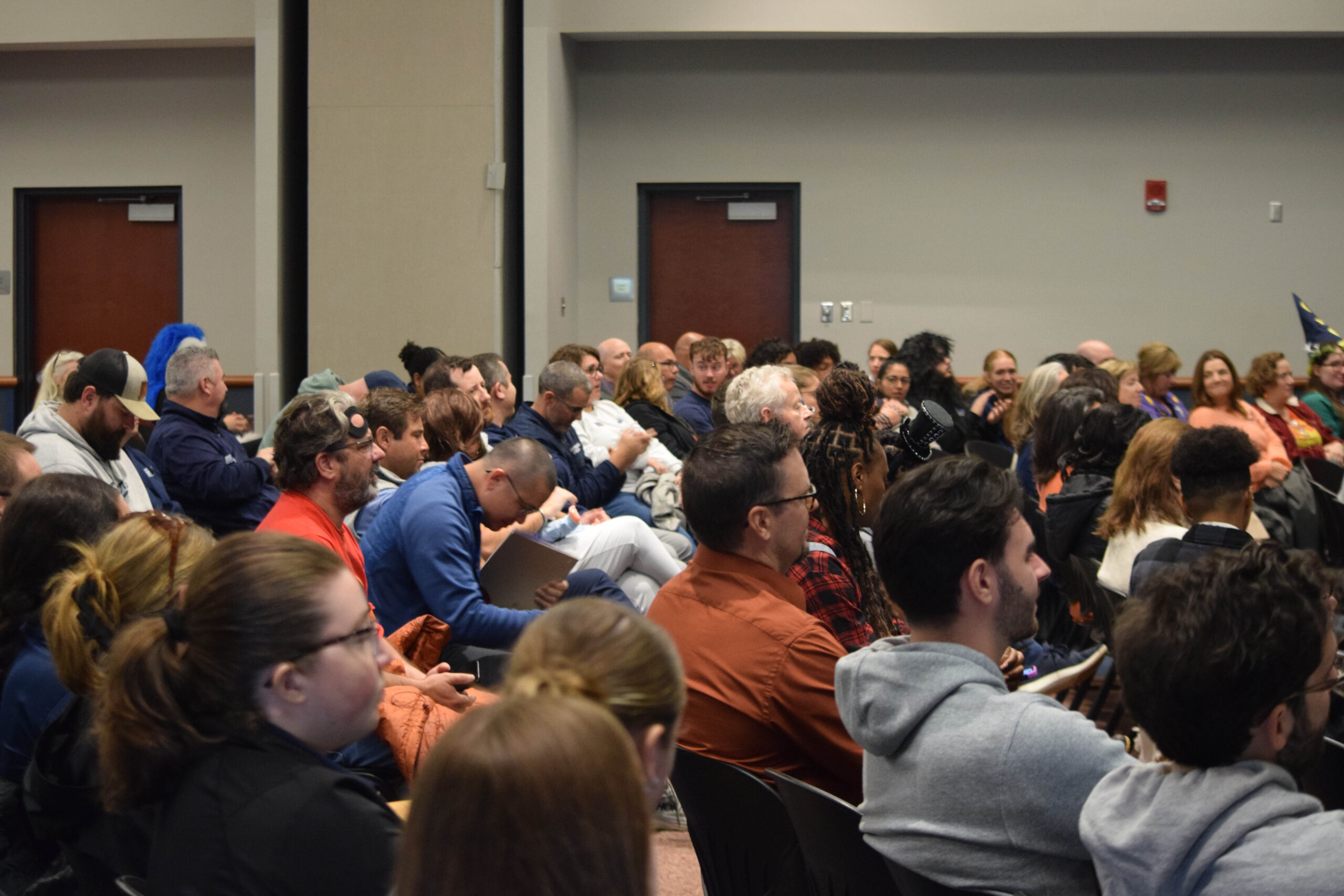
Bulmer also highlighted the financial aid and operational costs that help to sustain the university.
“We also give out a lot of financial aid,” Bulmer said. “We’ve got facilities, food service contracts, leases and rentals. And when we build those beautiful buildings, we pay debt service on all that money.”
Bulmer emphasized that these facilities and services are not free of cost, as they can take about 20 or 30 years to pay off. On the other hand, Bulmer shared how the university generates income to balance out these expenses.
“Sixty-two million is tuition, another 69 million is fees, and we get a state appropriation based on our enrollment. A few years ago, the state started helping us out with fringe, which offsets pension costs and is really helpful,” Bulmer said.
Bulmer also noted that enrollment plays a central role in the university’s financial stability.
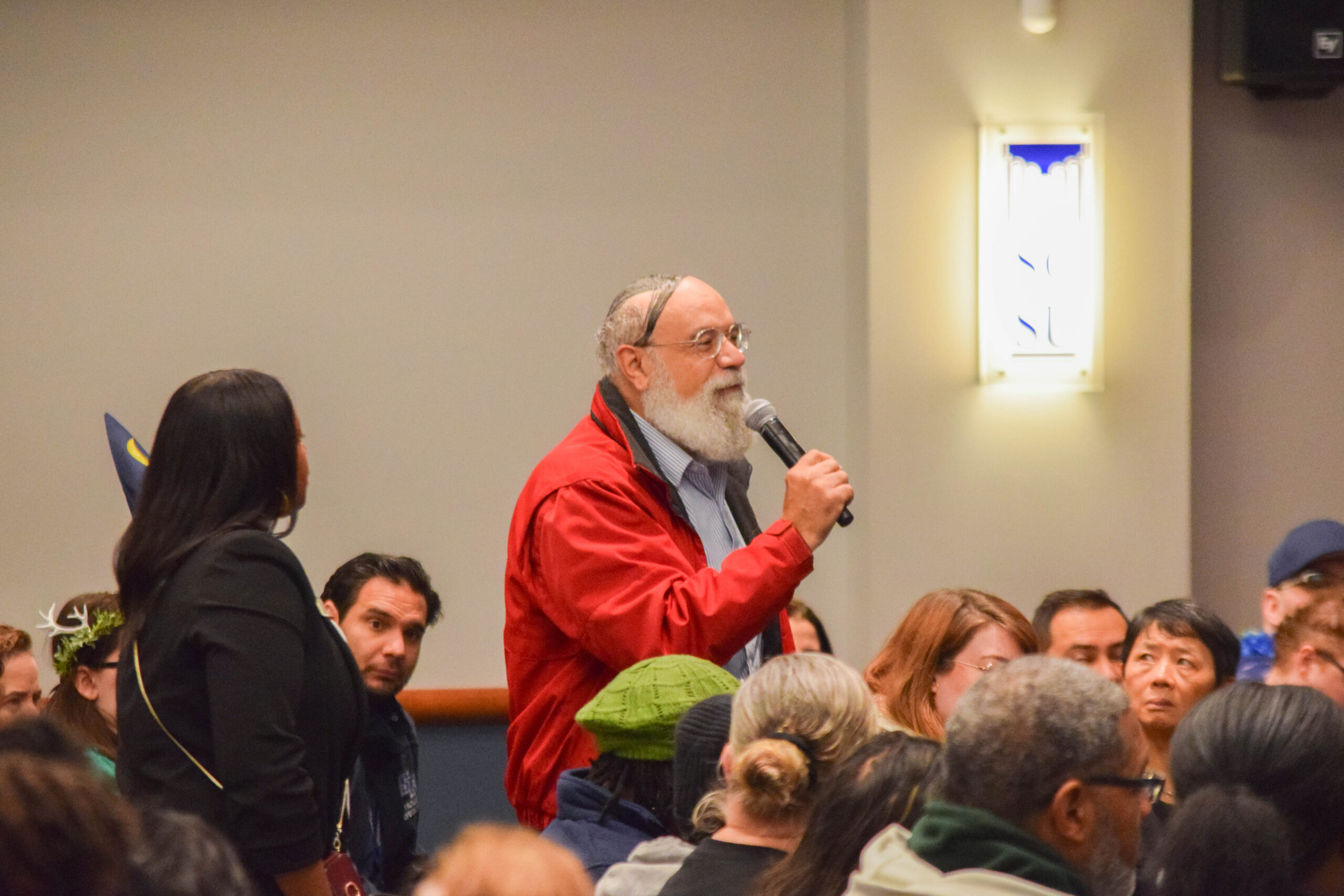
“The revenue is really all about enrollment,” Bulmer said. “We increased our undergraduate enrollment considerably, especially with a robust first-time, full-time freshman class.”
A strong freshman turnout reveals a promising sign of growth in the university’s future. Bulmer shared that when a large first-year class has a successful year, it benefits the institution.
“You have a good freshman year, and you get to have a lingering benefit of that,” Bulmer said. “If you have a really bad freshman year, the lingering sophomore, junior and senior years are smaller.”
Subsequently, Bulmer emphasized the importance of sustaining this trend through targeted strategies that meet a variety of different students’ needs.
“We’ve got to be focused on transfer students and other areas where, with fewer high school graduates coming out, we’ll need to shift our focus,” Bulmer said.
To strengthen enrollment efforts, Bulmer added that teams across campus are working on creative solutions.
“A lot of teams are doing work to identify pilots we can try,” Bulmer said. “We’re looking at building more relationships with community college partners, offering more evening classes and expanding online programs where they make sense.”
Bulmer then shifted the discussion to the university’s financial outlook by providing insight on roadblocks ahead. Bulmer explained that while the current expense model has been balanced for this year, it relies on temporary financial support that will not continue moving forward.
“This year, the system office gave us over eight million to pay our debt relief. They took it out of their reserves. They shared their reserves that you saw. We pay them, so it is our money, but they gave it back to us,” Bulmer said. “We’re not gonna get it next year, so that’s going to be a structural problem we have to deal with.”
Bulmer noted that the university also pulled nearly six million from its own reserves, signaling the need for careful financial planning in the months ahead.
“Those are two things — canary in the coal mine,” Bulmer said. “We’re still dealing with a structural deficit. So, we’re going to have to keep looking at that and figure out how we’re going to navigate it.”
Other challenges that Bulmer highlighted included the food service contract and advertising that goes way over the university’s means. Bulmer emphasized that innovative ideas and teamwork are important tools to overcome these hurdles.
“We’ve got these students who need to graduate and get the degree that we’re offering, the program or the experience, but we’re going to have to challenge ourselves to think about how we deliver that in the most cost-effective way,” Bulmer said.
Before the town hall closed its curtains, Bulmer restated the importance of communication and staying connected with the campus community.
“I’m sitting in the office and just hearing from a few people. That’s not the full picture,” Bulmer said. “We want to commit ourselves fully to understanding the needs, and those needs change. What they were six months or a year ago are different. Things are changing every day around here.”
Lastly, Bulmer encouraged a sense of collaboration and grace as the university navigates financial and structural challenges.
“I really appreciate your commitment to that work,” Bulmer said.