By Victoria Cruz
News Writer
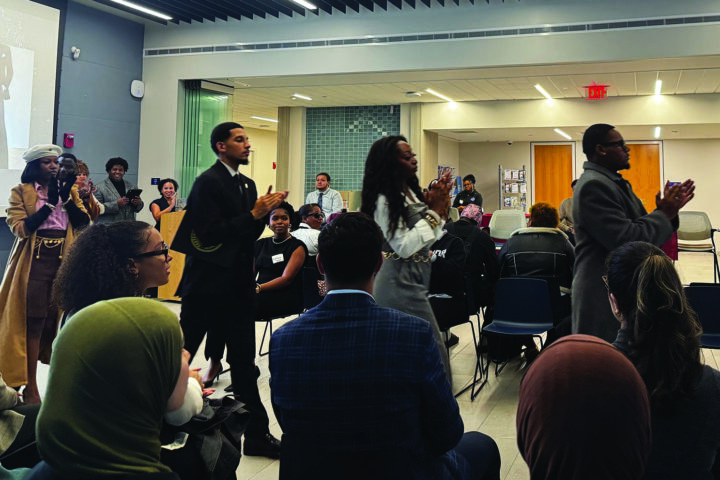
On Friday, May 1, the university administration team hosted a campuswide Town Hall led by Interim President Sandra Bulmer. The university addressed mounting budget concerns from faculty, staff and students.
The university budget was in a deficit this fiscal year, forcing the university to use its reserve budget. The deficit is projected to increase next year; strategies to combat the issue were proposed during the meeting.
“We’re broke, and one way to increase our revenue would be to raise your tuition. But you know from your students that’s not really feasible for them,” Bulmer said.
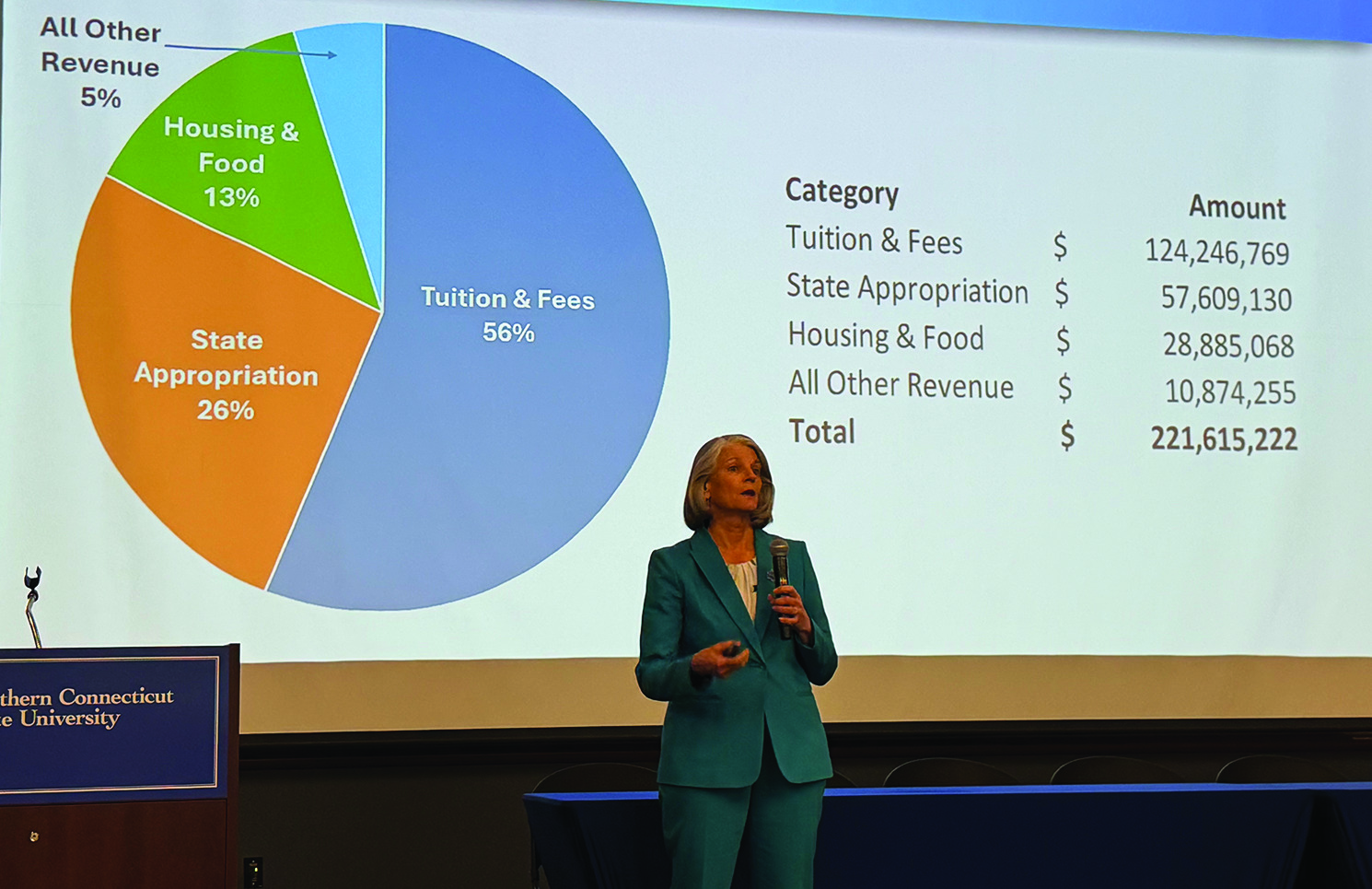
The projected spending on campus for the 2025-26 academic year was $240 million, with revenues suggested at $221 million. This indicates that the university has spent significantly more than it was able to make back.
To offset the deficit, the university used $10.9 million of their own reserve budget and $8.2 million from the Connecticut State College and Universities.
The worst-case scenario budget for the fiscal 2027 year estimates spending of about $250 million with a revenue of $224 million.
This includes a deficit of approximately $26 million and no anticipated coverage from the CSCU system office. Bulmer stated that the deficit comes from rising costs, low recruitment and contracts with third party companies like Sodexo.
The highest cost is expected to be the upcoming faculty raises, estimated at around $6 million.
“Unapologetically, you’re all expected to get a raise. That’s good for all of us,” Bulmer said.
In the worst-case scenario, the reserve budget would reach a low of $17.8 million. However, it is mandated that $22 million sit in reserves to pay for 30 days’ worth of expenses.
Additionally, only 26% of the operating budget is state appropriated; in the past, it has been as high as 44%.
“The state is taking a pass on funding the cost of our public institutions. And that burden, you feel it, and we see it with our students every day,” Bulmer said.
Each department was asked to audit their operating budgets to better understand how money is being spent.
“We didn’t know how we were spending our money,” Bulmer said.
After this reflection, Bulmer asked faculty members to consider cutting unnecessary spending within their departments as excess funds are returned to the reserve funds.
“I was kind of disconnected from the fact that if I hadn’t spent money, it would have gone back into our reserves and helped our overall university, and that’s where we have to start working together,” Bulmer said.
After this note, Bulmer recognized that faculty members may be hesitant to trust the administration after leadership transitions.
“I don’t think people are feeling like they want to trust if they give something up,” Bulmer said.
The last topic of discussion was Bulmer’s status, as she revealed that the search for the next president is set to begin in the fall semester.
“Right now, I don’t have any information, but I will let you know when I know,” Bulmer said.
Interim leadership positions have been halted as a result of in-system office delays with the chancellor’s vacancy.
While Bulmer asked departments to cut spending and donate additional funds to the reserves, there is hope that fair appropriation from the state will offset the budget.
“As a system, we are investing in reestablishing our credibility,” Bulmer said.
Bulmer stressed how leadership transitions have impacted the university.
“It’s really disappointing. It’s a huge distraction. And for people that want to weaponize this moment, it’s just serving it up on a platter. If you didn’t want to fund higher ed, we just served you a big excuse,” Bulmer said.
Political science major William Moroz, a senior and president of the Student Government Association, commented on the deficit after the meeting.
“The budget deficit seems to be more of an issue this year than it has in past years because we are taking money out of our reserves, and it’s concerning. The university needs to make more money and get more students,” Moroz said.