By Jay’Mi Vazquez
Managing editor
In celebration of Hispanic Heritage Month, a panel of professors and faculty came together to reflect on how their cultural roots shaped their academic and professional journeys.
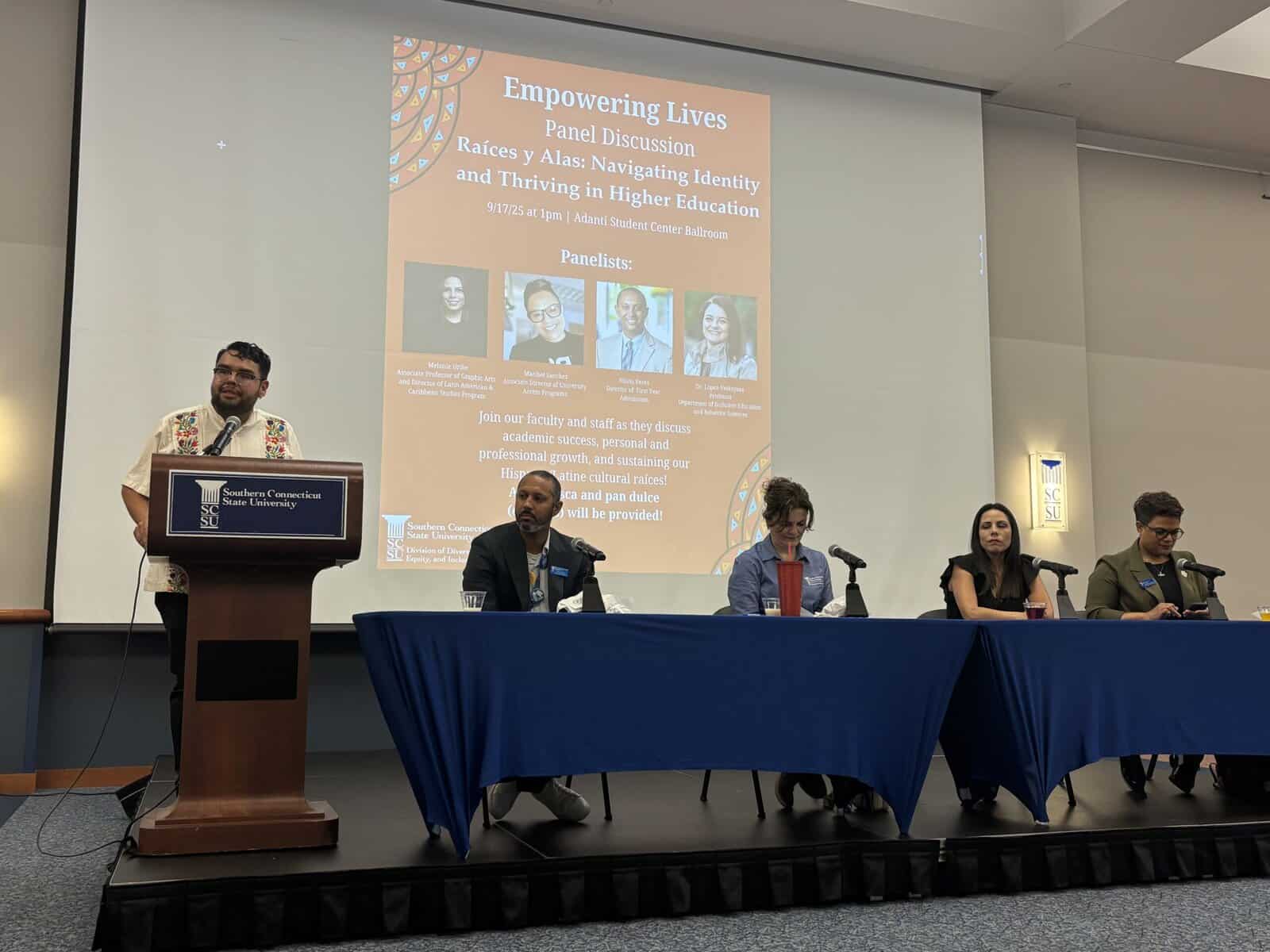
The empowering lives panel discussion titled “Raíces y Alas: Navigating Identity and Thriving in Higher Education” took place on Sept. 17, highlighting the importance of community, mentorship and cultural advocacy in higher education.
“We have to recognize the Hispanic academic excellence and professionalism that we have here on our campus,” Vice President for Diversity, Equity and Inclusion Sergio Pérez said.
The first panelist, Director of First Year Admissions Nilvio Perez, shared his experience as one of the first in his Dominican family born in the U.S. Growing up in a predominantly Italian neighborhood in New York, he embraced his Latino identity while navigating the cultural divide.
“Being Latino was never something that I dismissed,” Perez said.
Over time, Perez found purpose in helping others bridge cultural and language barriers, saying that he loves being that conduit to help people integrate into different communities.
Melanie Uribe, associate professor of graphic arts and director of the Latin American and Caribbean studies program brought the perspective of a Venezuelan immigrant.
She arrived in the U.S. just two weeks after graduating high school at 16, without family or friends.
“Everything was brand new,” Uribe said.
Her resilience, shaped by her Venezuelan heritage, taught her the value of community, which is a theme she continues to emphasize for students.
Representation, she added, is vital for students to feel seen and supported.
Maribel Sanchez, the associate director of University Access Programs, offered a first-generation perspective.
Her family came from Puerto Rico to Connecticut through a program bringing workers to the tobacco fields.
Growing up in Hartford, Sanchez faced early language barriers and later, cultural adjustment at a predominantly white college.
“It felt like I had to navigate all over again,” Sanchez said.
Today, she uses her story to guide first-generation students through their own transitions.
“I always lead with that in terms of my story and how I help others navigate their own journeys,” Sanchez said.
Sanchez echoed the sentiments of all the panelists, saying she wants students to be seen and believe that their other people like them on campus supporting them.
Undergraduate Coordinator of Inclusive Education and Behavior Sciences Angela LópezVelásquez spoke about her Colombian roots and the importance of embracing one’s heritage.
She described how some students feel pressured to hide their cultural identity to fit in.
To counter this, she highlights the beauty of multilingualism, proudly owning her accent.
“I have an accent because that’s the mark of bilingualism. This is where I come from,” López-Velásquez said.
She said she tells her students her story to encourage them to value their own linguistic and cultural differences.
The panel closed with a call for continued advocacy and systemic change, urging faculty to consistently check in with students and ensure they feel supported.
As Hispanic Heritage Month continues, the event acted as a powerful reminder: for many Latino students, their language, culture and community are not only central to their identity, but also to their academic and professional success.