By Valentina Toro
Features Editor
With guide dogs in training drawing smiles, the Guiding Eyes puppy raising club is inviting students to help raise future guide dogs while building responsibility and disability access awareness on campus.
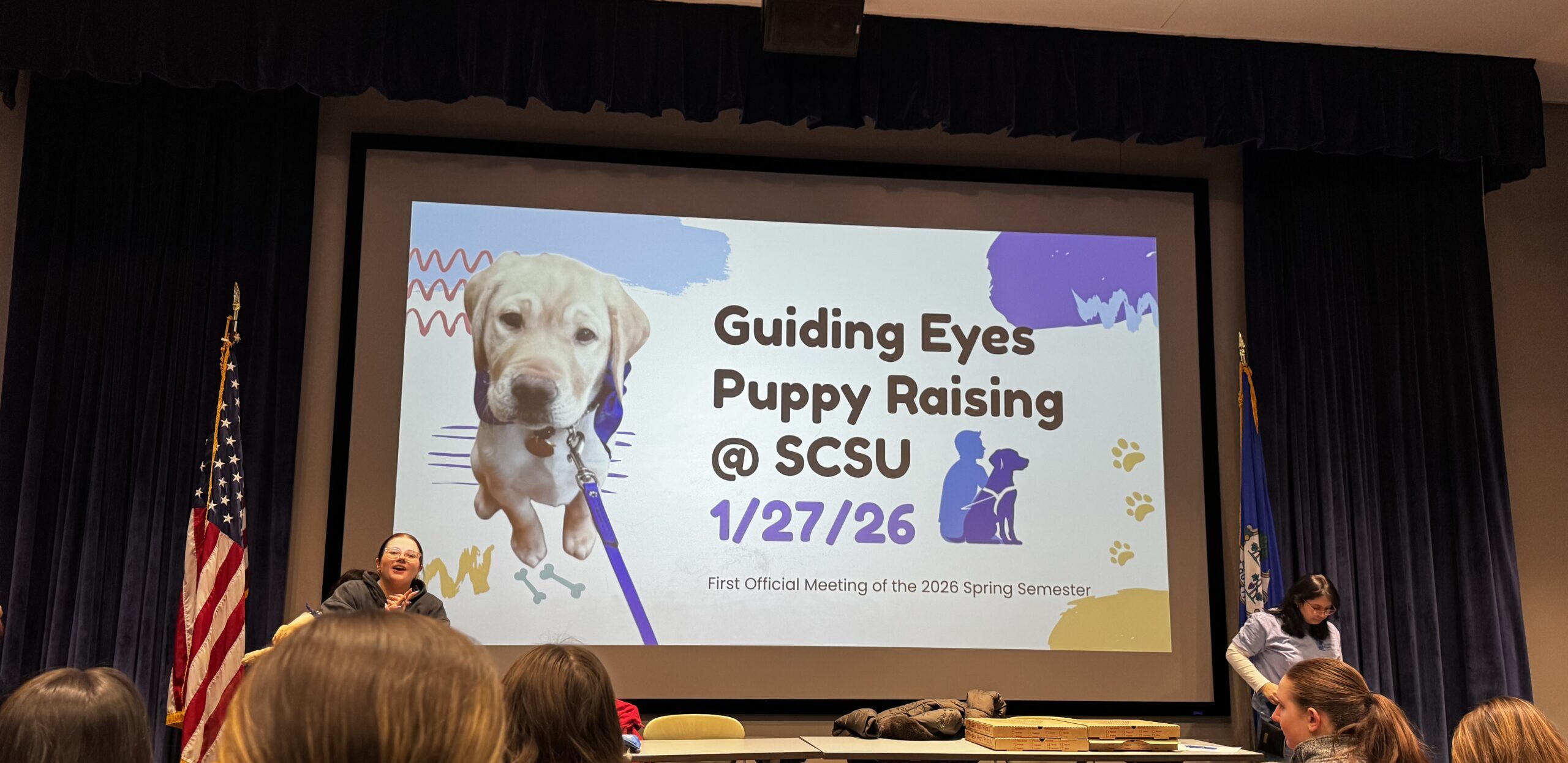
The Guiding Eyes puppy raising club at the university hosted its first information session at the Adanti Student Center Theater on Jan. 27, introducing students to volunteer roles that range from short-term puppy sitting to yearlong raising commitments.
“Guiding Eyes for the blind is a national nonprofit organization that provides dogs free of charge to those with visual impairments,” English major Ella Bernegger, a junior and president of the club, said.
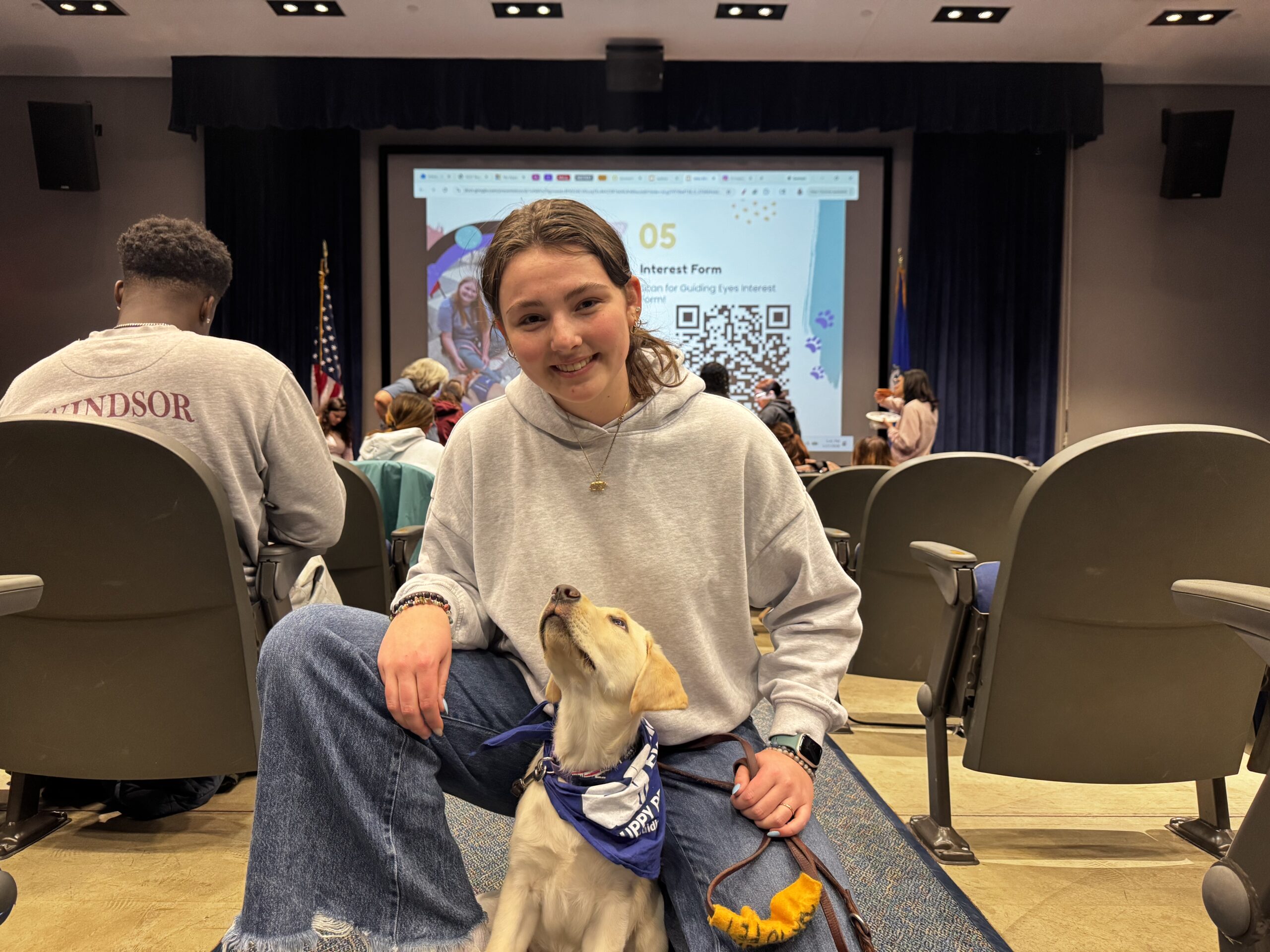
“It’s a way to get involved with the community, provide advocacy for those who aren’t really talked about a lot and be part of something meaningful.”
The organization places hundreds of dogs nationwide each year, matching trained guide dogs with people who are blind or visually impaired.
Student volunteers help care for puppies during their early development, socializing them and preparing them for formal training.
According to Maureen Hollis, regional puppy instructor with Guiding Eyes for the Blind, the dogs go on to make a measurable difference in daily independence and mobility for their future handlers.
“It really provides greater independence for the blind,” Hollis said. “A white cane will find objects — a dog will avoid objects. So, it allows them to travel in a more free and natural way.”
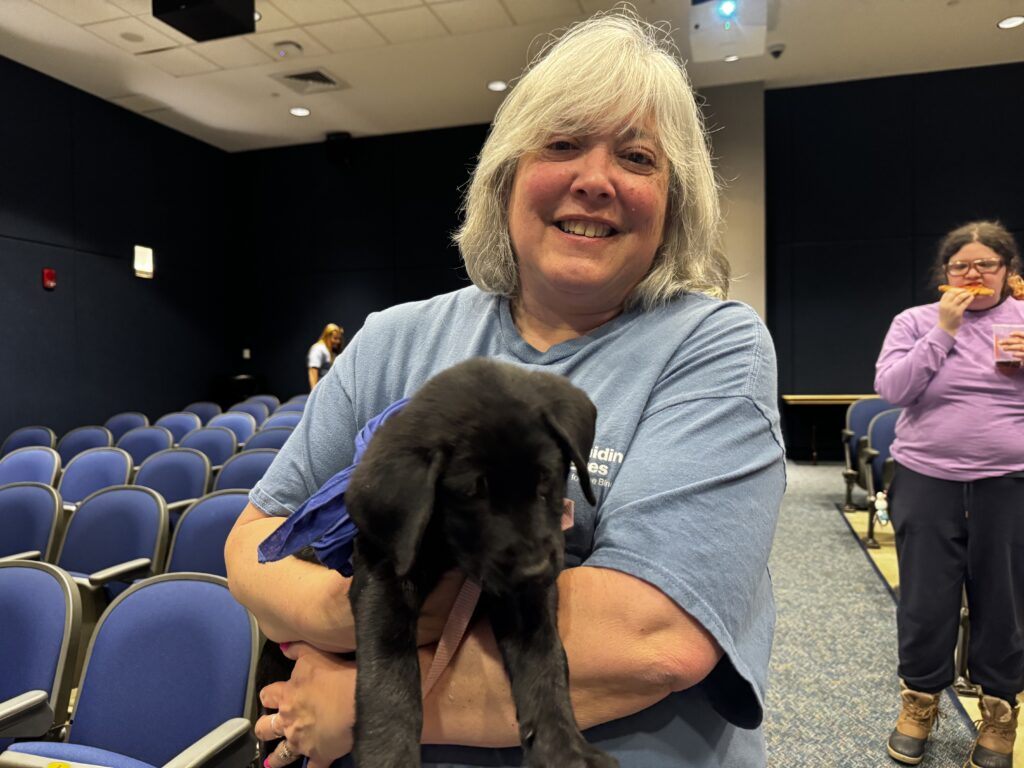
Students interested in participating are not required to commit to raising a puppy full time.
Options include serving as a beginning raiser for young puppies, co-raising with another student or acting as a certified sitter when coverage is needed.
While a full raise can typically last between 12 to 16 months, shorter placements can run for just a few months.
Organizers said college campuses are especially strong environments for puppy raising programs because of their built-in communities.
Guide dogs in training are exposed to busy walkways, classrooms and residence halls, helping them adapt to real-world conditions while also increasing campus awareness about guide dog access.
“Especially when you have a program like this on campus, it becomes a staple of the university,” Bernegger said. “If you’ve got dogs living in dorms, and you’re raising with your friends or your roommates, or you’re interacting with this club at all, it really gets a positive association with this program out into the world.”
The presence of puppies tends to draw attention — something raisers use as a teaching moment.
Early on, interaction is intentional and encouraged so the dogs grow comfortable around people, noise and movement. As training progresses, however, the rules change. Clear boundaries help prepare the dogs for professional guide work, where focus and consistency are critical.
“When they’re little, everybody wants to pet the puppies, and that’s okay because we need the puppies not to be afraid of people,” Hollis said. “As they get bigger, we ask people not to engage with them because they have to start ignoring people at a certain point when they’re out in public, just so they can do their job as a fullyfledged guide dog.”