By Brianna Wallen
News Editor
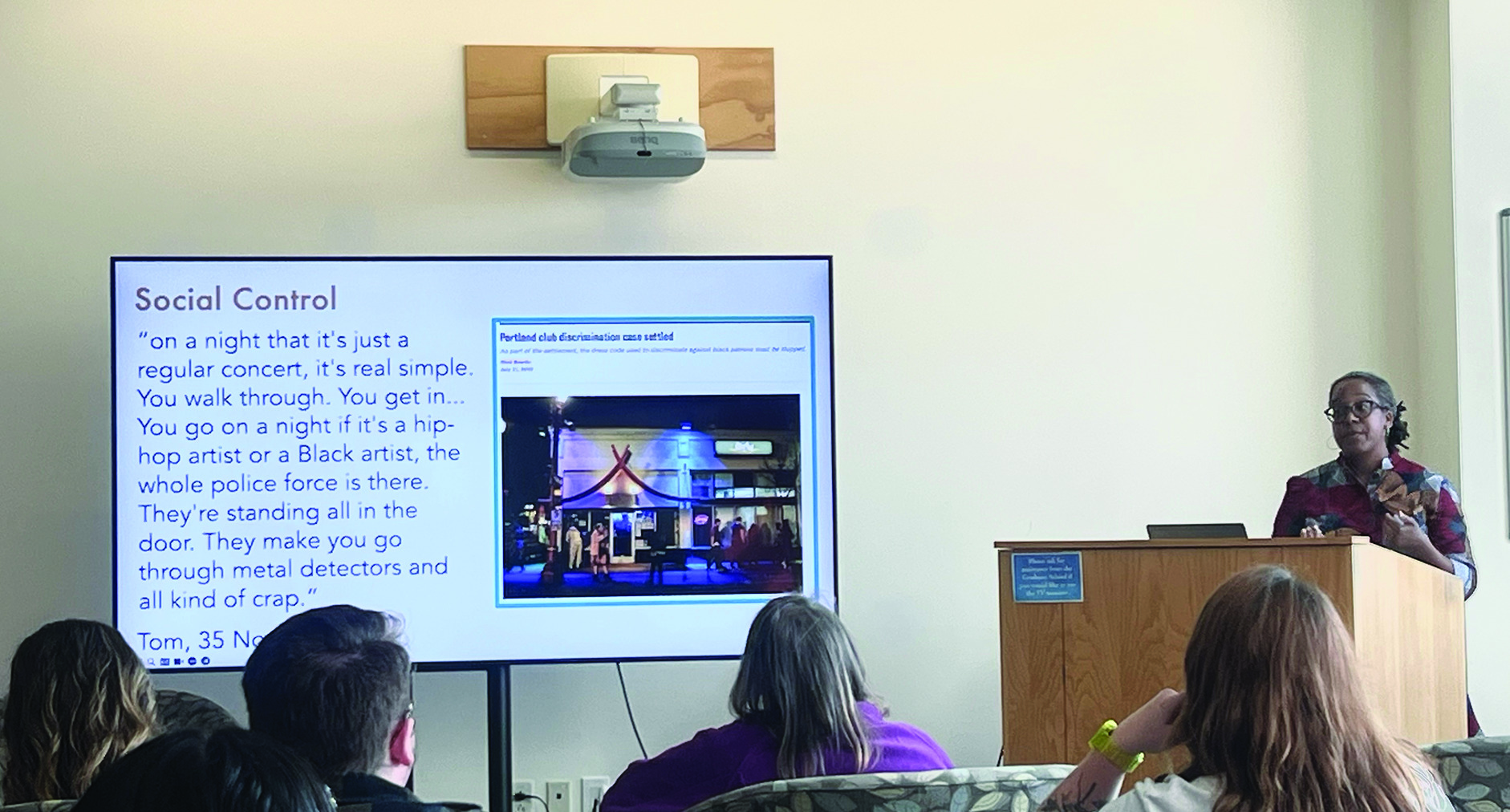
The campus community was invited on Oct. 22 to discuss belonging and identity at Shani Adia Evans’s seminar in Buley Library, where she shared insights from her book, “We Belong Here: Gentrification, White Spacemaking, and a Black Sense of Place.”
Based on studies of Portland’s Albina neighborhood, Evans highlighted the voices of Black residents who witnessed their once close-knit community reshaped by gentrification.
“This place, this corner, is marketed by the city as like a tourist spot that represents Portland’s Black history, and what I heard from my respondents, was that this is helpful, but it’s also superficial and not really solving the problem of white space,” Evans said.
Through their stories, Evans reveals the pain of displacement and the resilience of those who continue to claim space in a city that often overlooks them.
In her study, Black residents shared their experiences with what Evans called “white watching.” This is a behavior marked by questioning stares from white individuals towards non-whites that indicate exclusion and disbelief at their presence.
“I define white watching as a kind of surveillance in white space: that ‘you don’t belong here,’” Evans said. “So, you provide the credentials that you should be here.”
Evans read a quote from an interviewee, 53-year-old Tina, a hospital administrator who said that while driving through her grandparents’ neighborhood, she was stared at by white residents.
“All of a sudden, my mind went from what my mission was to always all these white people looking at me like I was getting ready to do a damn drive-by. I’m looking like, ‘What the hell are they looking at me for?’ And I thought, wow, they’re looking at me like ‘You’re out of place,’” Evans said.
Evans explained that this reflected a process she referred to as “white spacemaking.”
Despite areas being historically predominantly Black, white spacemaking causes whiteness to become the standard, and people of color are viewed with suspicion.
“My argument today is that there’s this process of white spaces, white space or white racial dominance in space that is interdependent with but not the same as class change,” Evans said.
Evans’s discussion encouraged reflection on how racism can not only shape neighborhoods but also the idea of who belongs.
The audience was comprised of staff, faculty and students who were eager to learn directly from the author, whose book was the main topic of their Honors 271 class.
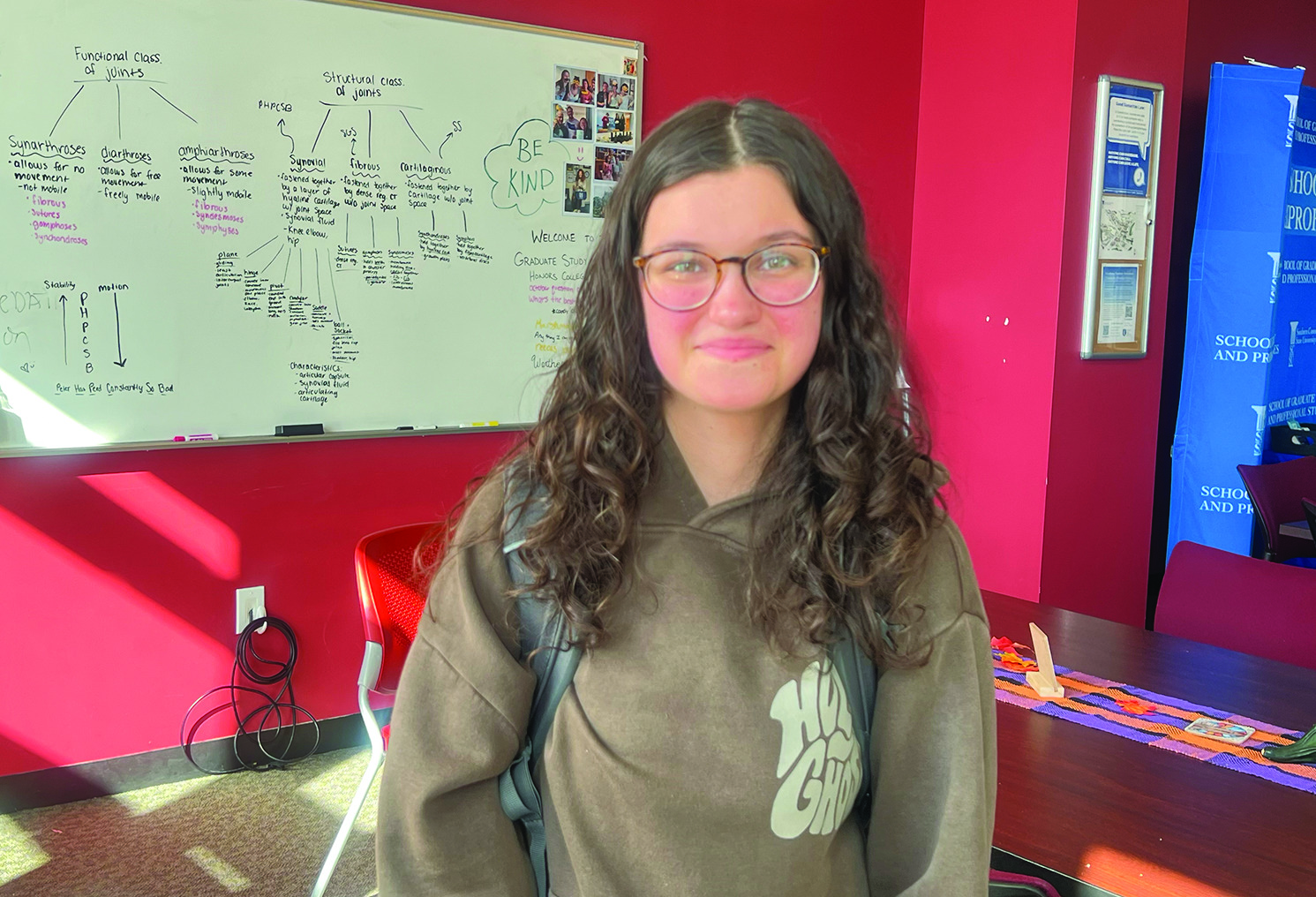
English major Ava Laperriere, a sophomore, said that hearing Evans speak about her study in person brought the material to life.
“It’s nice to see the author and hear how they are in person,” Laperriere said. “It’s one thing to read it because you can’t really hear their voice or how passionate they are.”
event.
From both the book and discussion, Laperriere said she gained a deeper understanding of gentrification and its impact on shaping history and community identity.
“I didn’t know that Portland was majority Black before it became majority white,” Laperriere said.
While Evans’s study sheds light on how gentrification operates through racism as a powerful force in neighborhood transformation, it also highlights the determination of Black residents to preserve and rebuild spaces of belonging in a predominantly white Portland.
“I find that people can experience and benefit from gentrification while simultaneously experiencing the marginalization associated with white space,” Evans said. “So, I think that raises new research questions for understanding how people participate in different kinds of neighborhood change.”
Through staple Black businesses and vibrant murals that celebrate Black culture and history, Evans said that Black residents were able to reclaim their space.
“There were negotiations that allowed for community benefit agreements and that required local people and Black folks to get hired in businesses and also open a number of small Blackowned businesses into development,” Evans said.
Evans’s insights extend beyond Portland, as she reminded listeners that these issues are not confined to one city or community.
“This case reflects broader social problems and broader social structures, and so I’m not convinced that the solution necessarily comes from addressing this particular case, but it’s more about how white supremacy and racial order shapes all aspects of our society,” Evans said.