By Brianna Wallen
News Editor
Students and staff filled the School of Business Case Study Room to hear a truth rarely spoken aloud: even the most successful leaders sometimes feel like they do not belong.
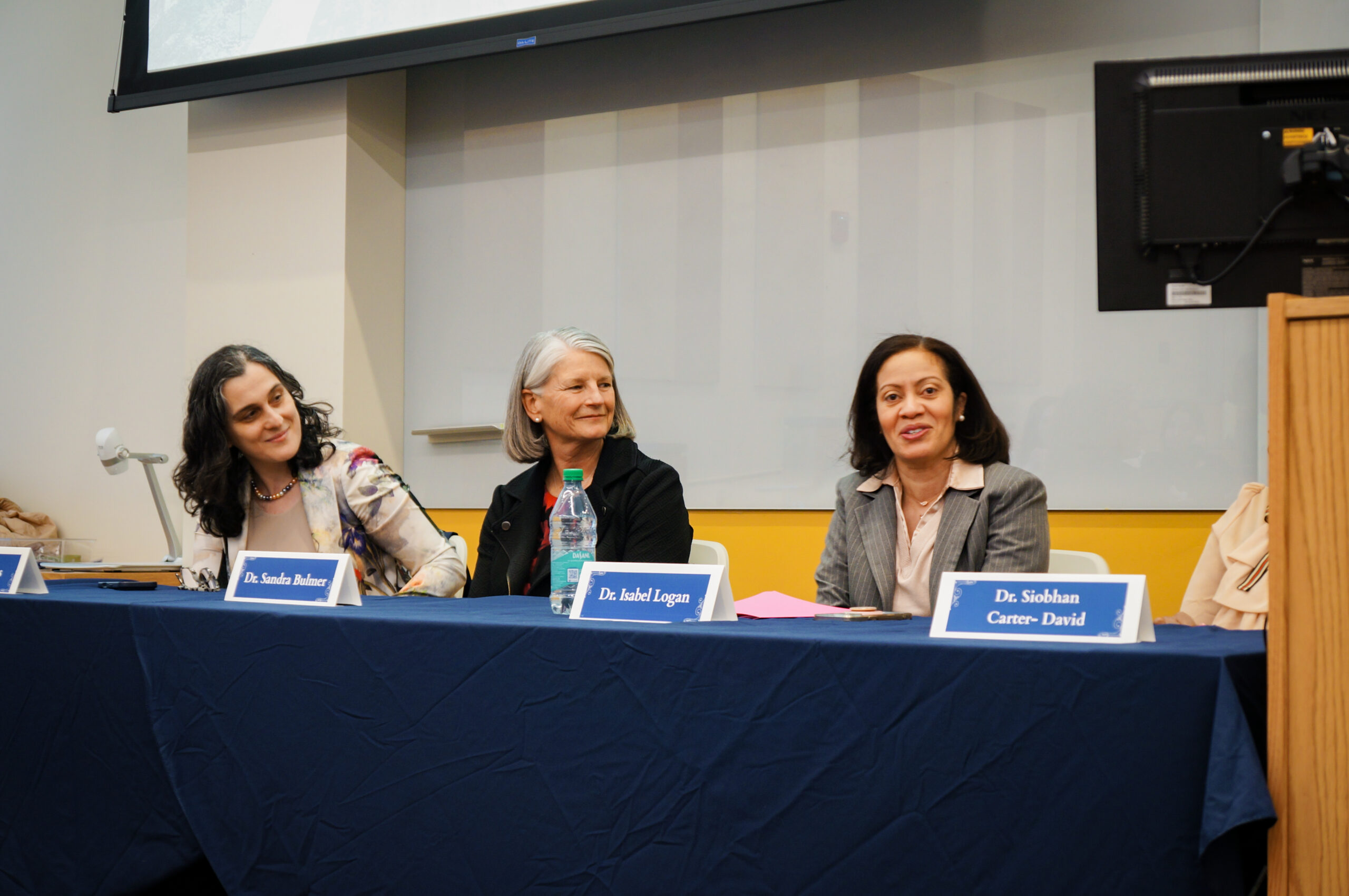
In a powerful session for Women’s History Month on March 24, the university’s interim president, professors and staff, shared how they turned the quiet weight of self-doubt into a shared source of resilience.
“I also felt uncomfortable in spaces that I felt like I didn’t belong, but I put that aside in the driver’s seat and let it not drive me,” Rabia Hos, the dean of the School of Graduate and Professional Studies, said. “What drove me was the students or the impact that I made.”

Moderated by Jess Gregory of educational leadership and policy studies, the panel brought together a diverse group of campus leaders.
This included Sandra Bulmer, interim president; Isabel Logan, associate professor of social work; Siobhan Carter-David, associate professor of history and women’s and gender studies; Javon Noblin, staff member, adjunct and graduate student; and Julia Irwin, interim provost.
Each speaker offered a unique perspective shaped by their role in higher education. Despite their different pathways, each woman shared one commonality: imposter syndrome.
This syndrome is not a rare experience but a shared reality for women across academia.
“For so long, I felt like I was the only one in the room,” Noblin said. “Oftentimes, there were spaces where I could have been the only woman or the only Black woman, and I’m just sitting there quietly.”
Noblin said that she could no longer ignore the silence in the room, as she was holding herself back from being heard.
Over time, Noblin said she made an intentional decision to start speaking up in these spaces.
“I’m passionate about higher education, and for me, it was necessary that the people with whom I’m sharing spaces understood and continue to understand that because I’m not going anywhere. This is it; this is me,” Noblin said.
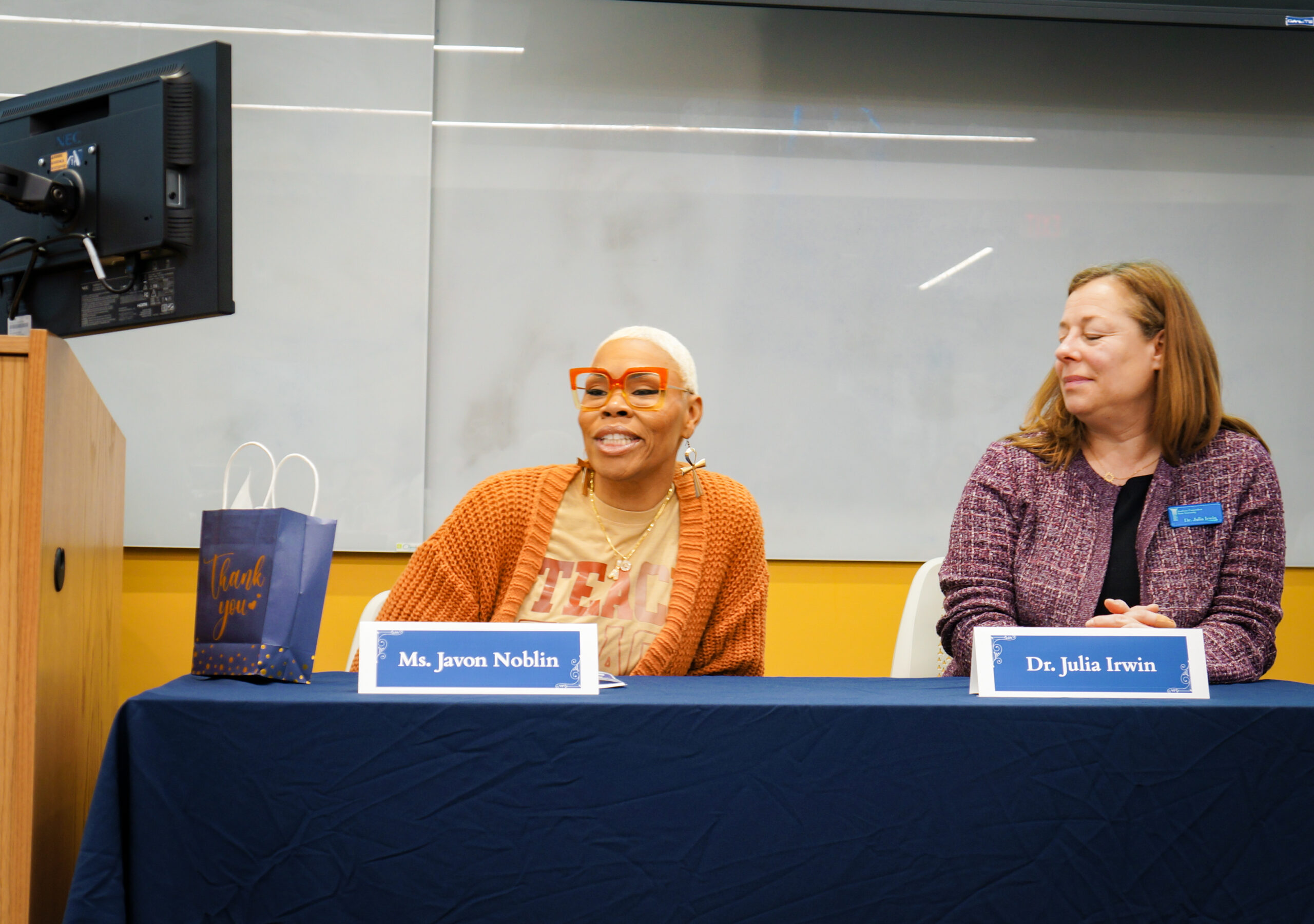
Noblin encouraged attendees to show up as their authentic selves and take up space in their environments.
The panel also addressed the demanding nature of academic careers and the importance of protecting one’s well-being.
Panelists emphasized that while passion for students and scholarship often drives their work, it can also lead to overcommitment in environments that fuel burn out.
For this reason, Bulmer emphasized how important it is for attendees to set boundaries.
“You have to have boundaries, and you’ve got to take care of yourself because no one else in academia is going to do that for you,” Bulmer said.
Bulmer said that figures in academia may feel like they have to take on everything because they feel connected to the role. However, she warned that women in particular can get pulled into this mindset in ways that may ultimately be to their own detriment.
Throughout the discussion, the importance of community took center stage. Panelists stressed that support systems, mentorship and shared understanding play a critical role in navigating academic spaces.
Logan, a first-generation student whose first language is Spanish, reflected on how access to guidance and mentorship can shape an individual’s ability to set boundaries and manage expectations in higher education.
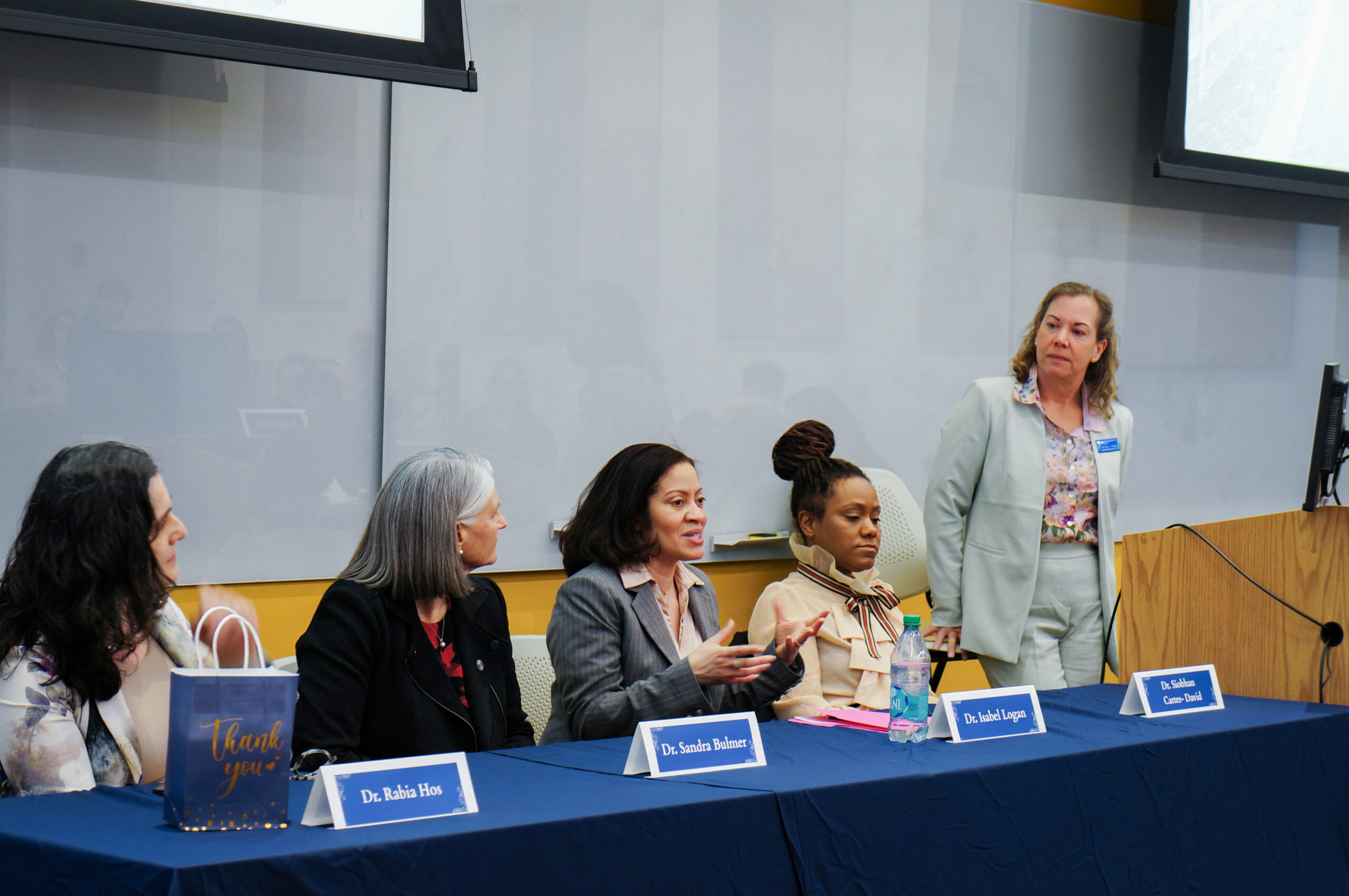
“When you’re someone who comes from a background where no one expected you to even be in academia in the first place, you may not have those supports,” Logan said. “So, it really does depend on how good your mentors are once you enter academia.”
Logan’s advice underscored the idea that success in academia is haped by meaningful guidance and support from others.
Panelists outlined that their message is not to steer attendees away from pursuing academic paths but instead to reframe how success in those spaces can appear, especially when navigating challenges like imposter syndrome.
As the discussion came to a close, the panelists ended on a hopeful note about growing in academia. Rather than viewing perfection or expertise as an end point, Irwin invited attendees to see learning as a journey driven by curiosity and interest.
“Be curious. If there’s things that really excite you that you’re curious about, you will be the expert in the room, and students will really enjoy learning about that from you,” Irwin said.