By Brianna Wallen
News Editor
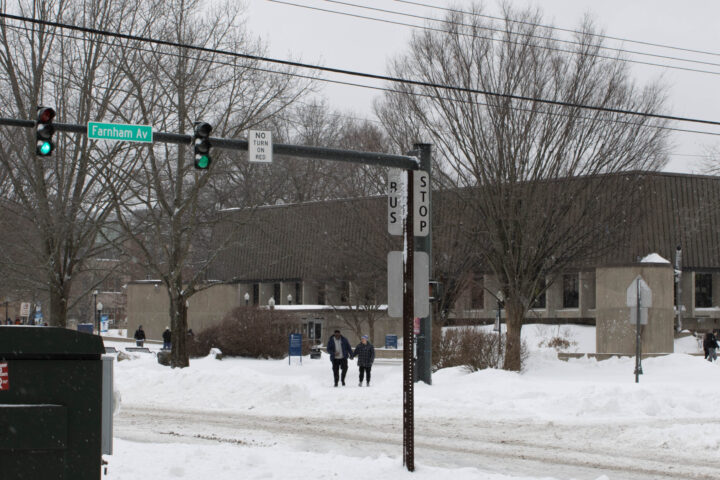
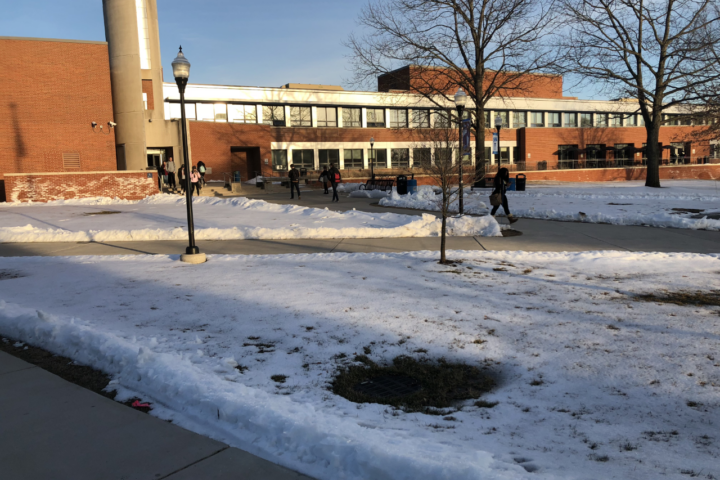
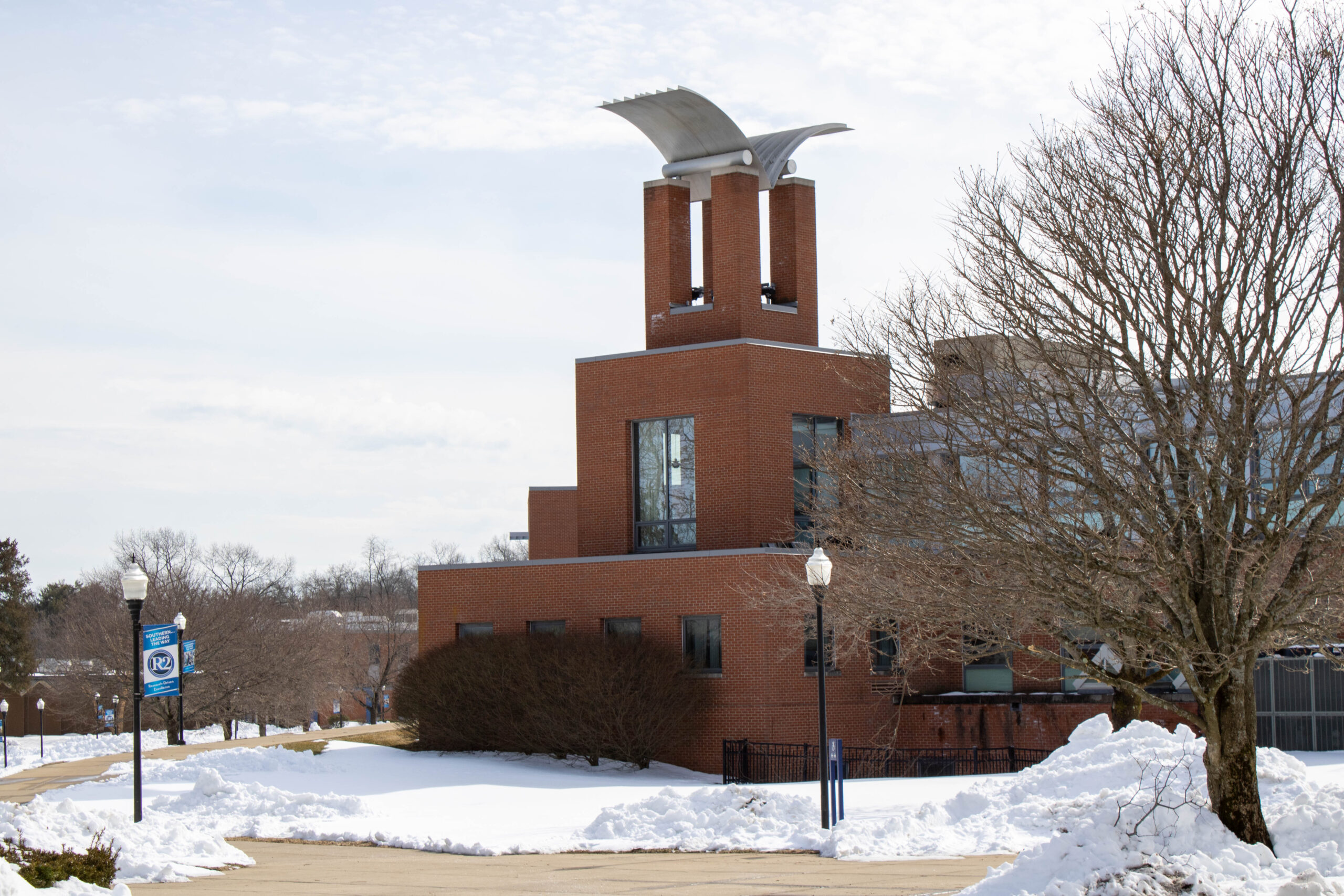
Blizzard Calvin buried New Haven under more than a foot of snow, forcing the university to cancel classes and shut down campus for three days. According to the National Weather Service, New Haven recorded 16.1 inches of snow on Feb. 23.
Allison O’Leary, interim director of integrated communications and marketing, said this decision to put normal operations on hold was based on the university’s assessment of the weather forecasts, travel risks and campus conditions.
“The decision to cancel classes is made with input from across the university,” O’Leary said. “Leadership considers the timing of the storm, the anticipated impact on campus and how conditions may affect commuters traveling from across the state.”
O’Leary said university leaders evaluated how the storm would affect commuters and overall campus safety before making the final call.
“With forecasts consistently indicating a significant blizzard, closing the campus was a timely and necessary decision in this instance,” O’Leary said.
O’Leary said that administrators weighed the need to keep classes running against the risks of icy walkways, high levels of snow and unsafe driving conditions.
“Leadership makes decisions that aim to minimize disruptions to academic learning while supporting the safety of students, faculty and staff. When travel to or around campus is uncertain, leadership errs on the side of caution,” O’Leary said.
After the closure was announced on Feb. 23, several campus offices worked together to send updates through email alerts, the university website and social media to quickly inform the campus community.
“Once the decision to close or delay is made, I coordinate with University Police, facilities, Residence Life and the president’s office to determine key information to communicate to the campus,” O’Leary said.
If students or staff missed the notification that campus was closed through their university email, they were able to receive the news across other platforms.
“That information is then sent via university email and through SouthernAlert, posted as a banner on the university homepage, communicated to local TV stations and posted to university social media,” O’Leary said.
Although snow stopped on Feb. 23, university officials decided to not reopen the campus immediately.
With the campus community’s safety as the top priority, they chose to monitor cleanup progress and campus conditions.
“Due to the heavy snowfall, discussions continued throughout the cleanup process to assess campus readiness and determine the safest time to reopen,” O’Leary said. “This is standard practice during high-impact weather events.”
While university facilities teams focused on reopening walkways and entrances around campus, O’Leary said that clearing parking lots was more difficult because snow removal required large open spaces for plows to move efficiently.
“Our facilities team works across campus throughout a storm to clear as much snow and ice as possible as efficiently and thoroughly as they can. When vehicles are scattered throughout parking lots and garages, it makes snow removal much more difficult and results in incomplete clearing,” O’Leary said.
For this reason, multiple messages were sent out to students and staff about temporarily moving their car to West Campus or Wintergreen Parking Garage.
“To help the process go smoothly, we ask students to move their cars from surface lots into the garages before a storm begins,” O’Leary said. “Once the storm is over and surface lots are cleared, we then ask students to move their cars out of the garages so all levels can be properly plowed.”
Although the university was closed, support services remained available for students navigating disruptions caused by the storm.
“The Student Support Team provides a proactive and coordinated approach to support students in distress while promoting their well-being and maintaining campus safety,” according to the university’s dean of students office.