By Brianna Wallen
News Editor
As the community observes Substance Use Prevention Month, a message formed from tragedy has grown into a movement of healing, hope and education.
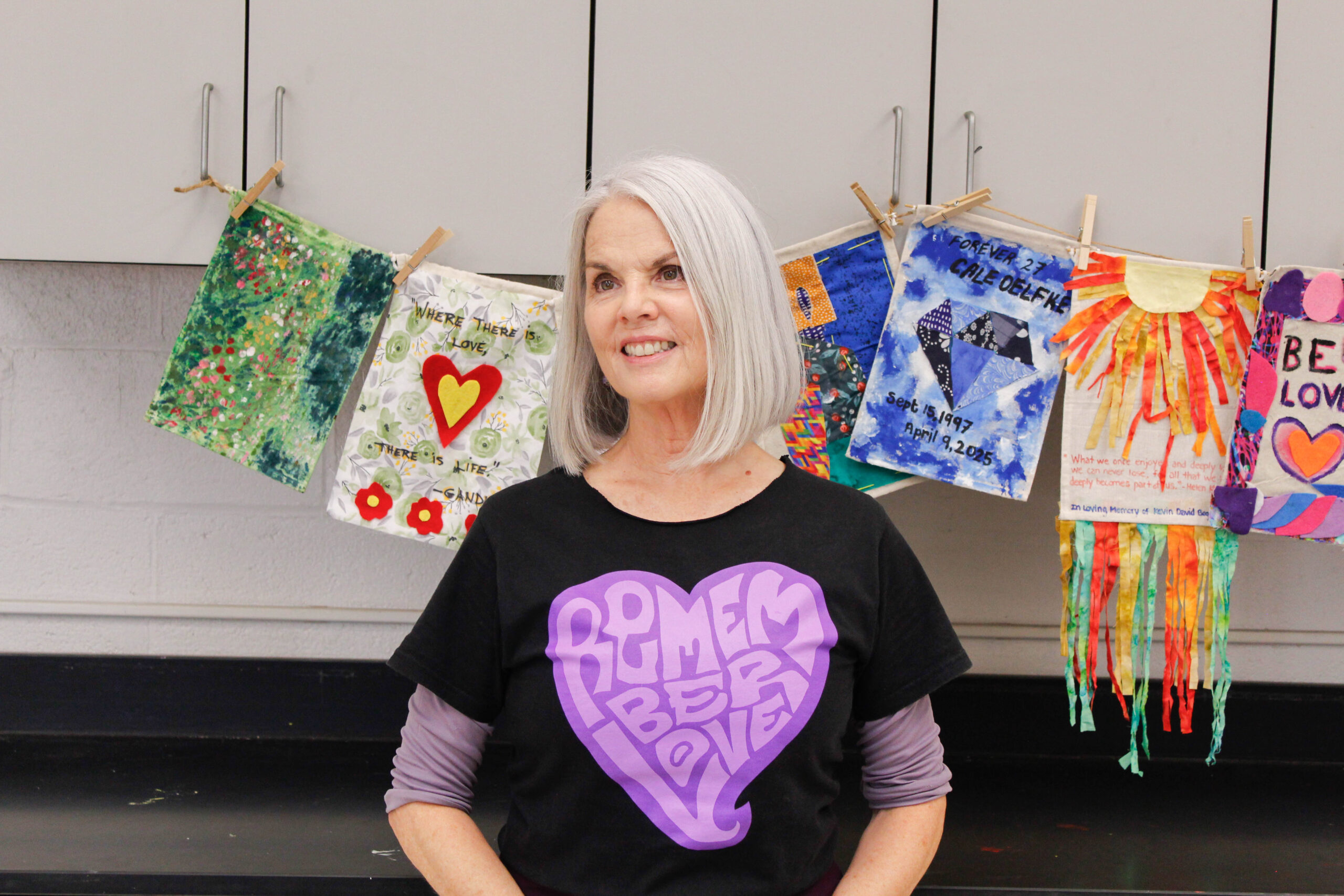
The Remember Love Recovery Project, founded by Patricia Bode, associate professor of art and coordinator of the art education program, aims to reduce stigma around addiction while promoting compassion and recovery through creativity and community.
“The Remember Love Recovery Project uses art making, education and human connection to change how people think about addiction and recovery,” Bode said.
Bode started the project about three years ago following the accidental overdose of her son, Ryan Moriarty, in 2018.
Moriarty was an artist, musician and T-shirt designer whose most cherished creation featured the phrase “Remember Love.”
After his passing, Bode and her family saw the message as a call to action and a way to honor his legacy.
“We felt like this was a message Ryan left us with,” Bode said. “If one can remember love, there’s a lot we can do to help stem the tide of overdose deaths and destigmatize addiction.”
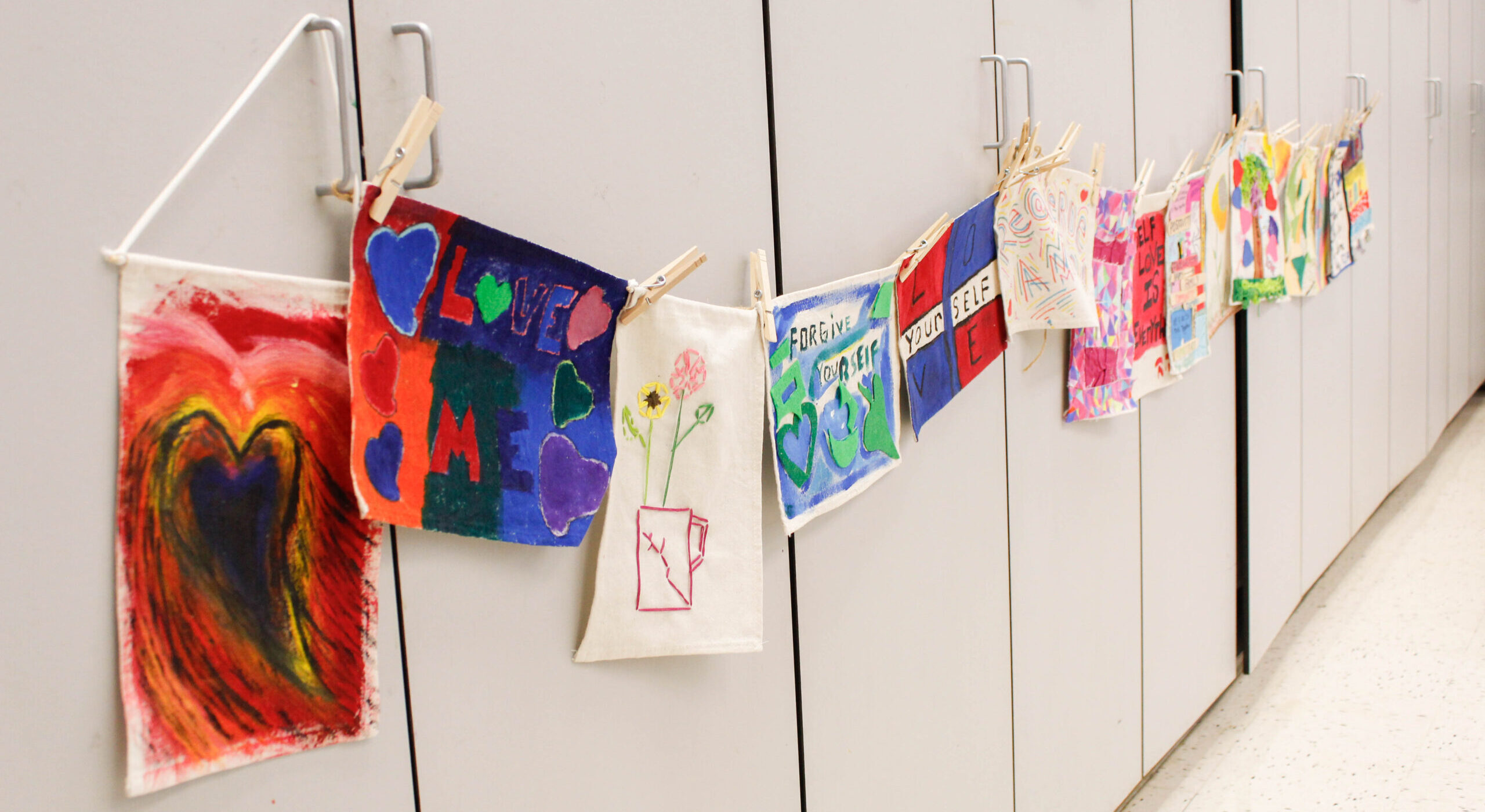
The most recognizable activity is the Recovery Flag Project, an artistic effort where participants create fabric flags symbolizing healing, remembrance and resilience.
Bode said the idea came to her when she saw her son’s artwork displayed at his memorial.
“When I saw them blowing in the wind, I thought, ‘Oh, they remind me of prayer flags.’ It gave me the idea: what if we could do something called recovery flags?” Bode said.
Inspired by Buddhist prayer flags, Bode said she wanted the flags to carry messages of compassion and love into the world.
“The Buddhist tradition is that you pour your compassion into it, and it blows through the wind to spread that compassion through the world,” Bode said. “And I wanted to be inspired by that idea to make what we call recovery flags, and I got blessings to do that.”
Each recovery flag is unique and decorated through painting, stitching or collage. Bode said that on a 9 inches by 12 inches banner, participants are able to breathe life through their artwork.
The initiative, which recently became a nonprofit organization this summer, has produced more than 4,000 recovery flags with about half donated to the project’s collection.
“Our goal is to bring thousands of recovery flags to the Washington D.C. mall sometime in the next couple years because we want to have an event there where we can raise national consciousness,” Bode said.
Each brushstroke, stitch and piece of fabric allows her son Ryan’s creative spirit to live on.
What began as his T-shirt design is now a creative and healing movement that has thousands of hands united by art and empathy.
From community centers and museums to correctional facilities and transitional housing centers, Bode has led workshops in 15 states.
Bode works closely with addiction recovery units in Connecticut prisons, where creating flags and sparking conversation provides a moment of peace for incarcerated individuals.
“We hope that one of the first and foremost experiences that people take in and hold onto is human connection,” Bode said. “When you’re making recovery flags in a group, it’s really different.”
Bode revealed that these workshops often have a lasting effect on participants.
“Every single time I go to a workshop and do it in a prison, somebody will say to me at the end, ‘I forgot I was in prison,’” Bode said. “They just have something to pour their thoughts into.”
Bode emphasized that the process is not only creative but both reflective and restorative.
“There is a healing impact, and it’s also a bridge to kind of personal introspection,” Bode said. “It goes inside of us to our own reflection and healing and peace, but it also goes outward to express things to others or to the world.”
Along with allowing participants to express themselves, Bode said that one of the project’s central missions is to confront the stigma that often prevents people from seeking help.
She explained that due to addiction disorder being misunderstood and overlooked, both those struggling and their families often experience isolation.
“Families don’t know what to do with this information if they do know that their loved one is ensnared in an addiction disorder,” Bode said. “That stigma really prevents people from talking about it, from getting help, from getting access, and it just cuts people off from the community.”
By using art as a bridge for empathy and to spark conversation, Bode hopes to replace shame with understanding and compassion in order to remind communities that recovery is achievable.
Students at the university also had the opportunity to get their hands dirty.
Bode brought the project to campus during the Artivism Conference, where students and community members learned about its mission and crafted recovery flags.
Bode said college students are an important audience for prevention and education, as they are one of the most vulnerable populations.
“College students are at a major point of decision-making in their lives,” Bode said. “They’re forming their identities, and it’s easy to be influenced by substances like alcohol or drugs. We want to promote connection, education and self-worth through art.”
Through art and human connection, Bode continues to create spaces where people can heal, connect and feel seen.
Her work encourages others to lead with empathy and understanding, both toward themselves and those struggling with addiction.
“If we can remember love,” Bode said, “we can really preserve the dignity and worth of all human beings.”