By: Julian Markese
Contributor
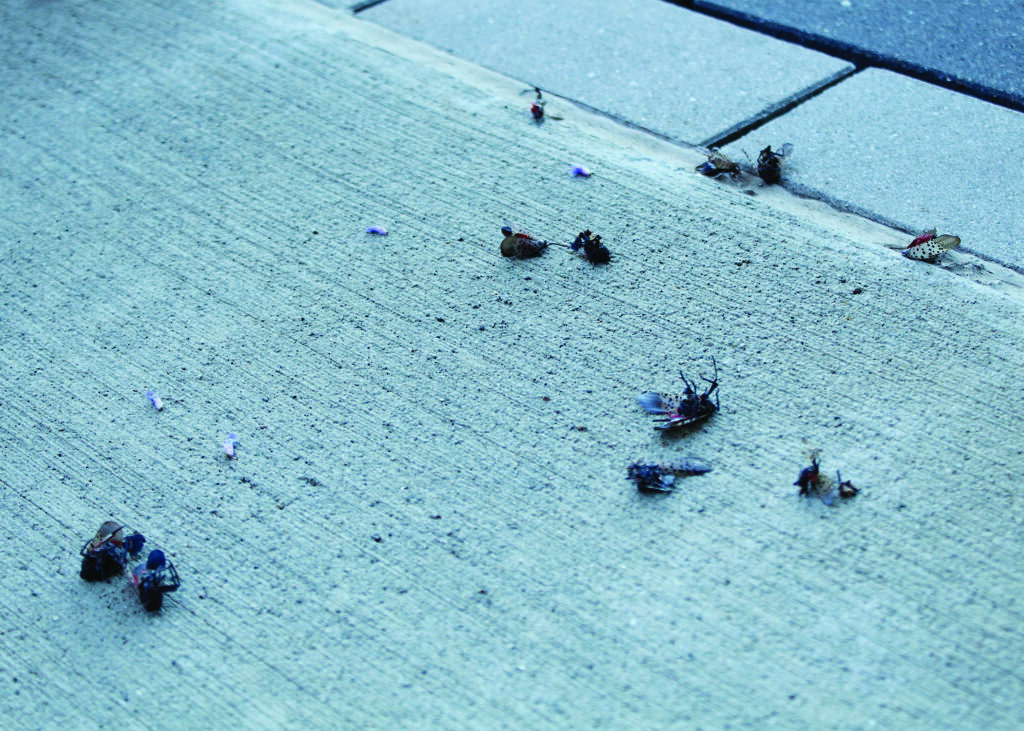
As students and staff walk around campus, they may spot grey and red ash carcasses laying crushed on the stairs, sidewalks and windowsills.
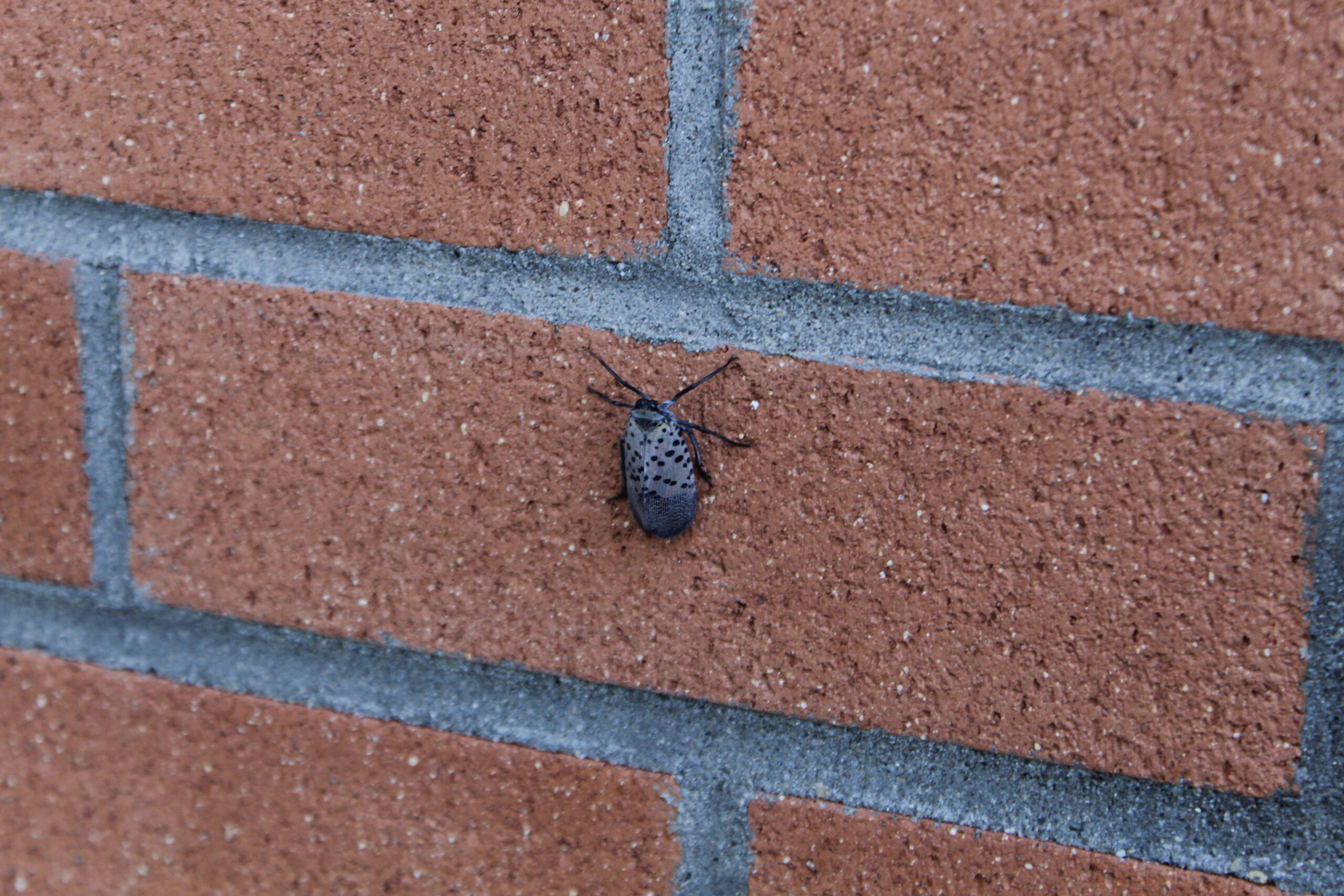
The spotted red lantern fly is back.
“I know that they are bad for the environment,” English major Keira Kaminsky, a junior, said.
Spotted lantern flies are not native to Connecticut, but they now inhabit all eight counties and at least 153 towns, according to Connecticut Agricultural Experiment Center Director Jason White.
Each Connecticut county has at least 18 tree species that are known hosts of the bug, according to data from the Integrative Ecology Lab at Temple University.
The Connecticut Department of Energy and Environmental Protection has clear cut instructions for citizens: kill the lantern flies.
They do not harm humans directly, but by cutting off resources to trees, they threaten to disrupt the current ecosystem.
The spotted lantern fly can feed over 70 different plant species, according to a fact sheet published by the Connecticut Agricultural Experiment Center.
Kaminsky, who said she is typically hesitant to impose herself on her natural environment, said she views lantern flies differently than other critters.
“They are actively harming the environment and making life harder than it already is,” Kaminsky said. “I think that justifies killing them.”
She is not alone.
Environmental systems and sustainability major Marina Salicki, a junior, who describes herself as an “animal lover, shares the same perspective.
“I capture them alive and put them in jars,” Salicki said. “I line them up in my bedroom.”
U.S. Sen. Richard Blumenthal is seeking to introduce legislation that would appropriate federal funds towards Connecticut’s fight against the lantern fly.
According to Connecticut Post, Blumenthal’s proposed legislation would allocate between $20 million and $50 million toward the effort.
But boots, jars and even federal funding may not be enough.
According to an informational flyer from the Connecticut Agricultural Experiment Station, we might never eradicate the lantern fly from the country.
Philosophy professor Chelsea Harry, who teaches a class on the ethics of sustainability, said that there are ethical questions for students to consider.
“Why does this particular lantern fly, minding its own business, just trying to survive like any other living being, deserve to die?” Harry said.
Harry said despite the invasive nature of these insects, it is important to weigh the ethical concerns.
“Obviously, this is an important concern but is the solution to eradicate the existence of an established population of living beings?” Harry said. “Perhaps, there is another way.”
That other way, suggested by Harry, might come in the form of relocation — a proposal that she acknowledges raises questions of its own.
But at the center of the issue is anthropocentrism: they often carried belief that humans are the most important beings on the planet.
Harry said that when society seeks to fix one problem, the solution is often misguided and thus both possible outcomes “are problematic.”
Here lies the dilemma for the student who sees the still breathing lantern fly just beneath their feet.