By: Brianna Wallen
Editor-in-Chief
By: Mackenzie Byerlee
Features Editor
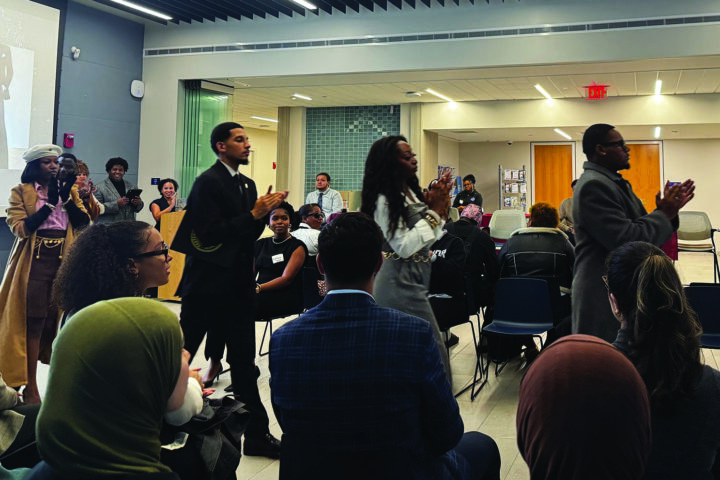
Students and faculty gathered in the Adanti Student Center Ballroom for a conversation about education, inclusion and empowerment at “Empowering Lives Lecture” on Sept. 23.
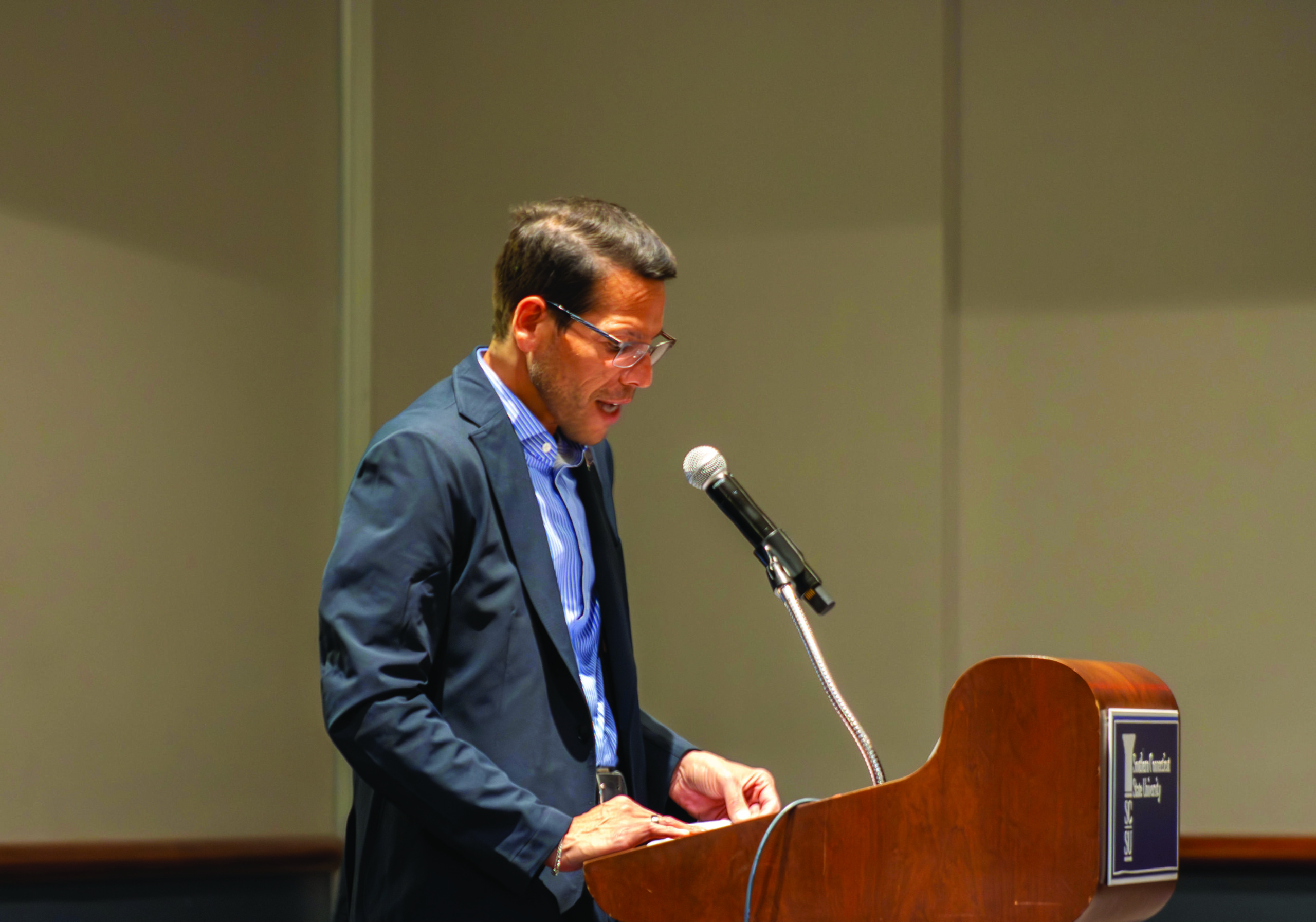
Every year, the university hosts this lecture in order to celebrate Hispanic Heritage Month and this year’s speaker was Western Connecticut State University’s President Jesse Bernal. During his lecture, he told stories that brought the entire room together.
“I wanted to start by talking about my grandmother, who really raised me,” Bernal said. “Her formal education ended in middle school and I became a university president.”
The lecture included photos of Bernal’s family and made it clear how personal this topic was to him as both a former student and current educator.
Bernal shared how his personal experiences have shaped the decisions he has made as a university president and how certain things have opened his eyes to things that others might overlook.
The hardships he faced as an undergraduate student regarding his sexuality and feeling as though he did not fit in is the reason that he strives for inclusivity at his university and therefore, the Connecticut State University System as a whole.
One topic that Bernal spoke about was the idea that no one has any idea what someone else is truly going through behind closed doors.
College students are dealing with personal and academic struggles daily and Bernal stressed the importance of understanding that when working in higher education.
“I’m much more cautious about assuming that what I see in someone’s life today tells me everything I need to know about how we arrived there,” Bernal said.
Every student is on their own journey and has their own goals and dreams in addition to hardships and worries.
Bernal also noted that the only way issues concerning students can be addressed, is if students approach leadership with what it is they have been struggling with, which not everyone feels comfortable doing.
Following that, Bernal shared that there is always more that universities can do when it comes to being a Hispanic-Serving institution.
“As our students change, how must our institutions change to better serve them and to continue developing empowered lives?” Bernal said. “My undergraduate years remind me how much a person can carry quietly, even being unseen or not noticed.”
According to the university’s Common Data Set for 2025-26, there were 452 Hispanic/Latino degree-seeking first-year students and 1,886 Hispanic/Latino degree-seeking undergraduates, including first-year students, as of Oct. 15, 2025.
CDS recorded that their were 2,225 Hispanic/Latino undergraduate students in total, including both degree and non-degree-seeking students, out of the total student population of 10,027 during the 2025-26 academic year.
This was an increase from the previous year. CDS highlighted that as of Oct. 15, 2024, there were 314 Hispanic/Latino degree-seeking first-year students, 1,632 Hispanic/Latino degree-seeking undergraduates and 1,880 Hispanic/Latino undergraduate students in total, including both degree and non-degree-seeking students.
This was out of the total student population of 9,377 during the 2024-25 academic year.
The CDS data indicates that Hispanic/Latino students made up 20.05% of the student population in 2024-25, compared to 22.19% in the following year.
As the Hispanic and Latino community continues to grow, the efforts have expanded to create a campus environment that recognizes and supports it cultural diversity.
This includes a list of events centered around Hispanic heritage Month, that the community can learn about and enjoy, from “Mi Gente, Mi Familia, Mis Amigos: Student, Staff & Faculty Mentorship Connection” to “Día de los Muertos Ofrenda Planning Meeting.”
Bernal also stated that to be a Hispanic-Serving Institution has everything to do with how university leadership works to acquire and maintain that title.
He said that intentionally choosing to serve students is something that not all university leaders may do, despite how important that is to everyone in the campus community.
With that in mind, Bernal left the audience with the knowledge that there is always more that universities can do for their students, especially when it comes to striving to become a Hispanic-Serving Institution.
“Students should not have to carry the responsibility for changing the institutions they came here to learn from,” Bernal said.