By Brandon Cortés
Features Editor
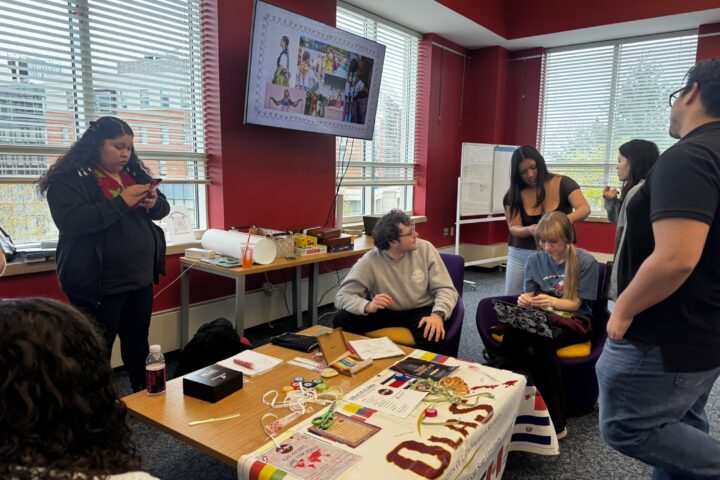
Students often face more than just academic pressure during the semester. To address this, the university’s Wellbeing Center hosted Can We Talk?, a new conflict resolution workshop held in the Adanti Student Center Room 201.
The event aimed to teach students practical communication strategies while breaking the stigma that conflict must always be negative.
Wellbeing Coordinator Allyson Regis said the idea came from repeated student concerns and collaborations with counseling services and student involvement staff.
“We thought it would be a good idea to do a workshop just talking about how to actually deal with the conflict,” Regis said. “Oftentimes, we’ve been hearing students say they didn’t know what to do or just avoided the situation altogether.”
Regis explained that the Wellbeing Center’s mission extends beyond emotional and physical health to include building authentic relationships on campus.
“If you’re not willing to really deal with conflict in your relationships, sometimes that limits how authentic those relationships can be,” Regis said. “You might be holding on to certain things and not really talking about them.”
Researchers say that kind of support matters more than most students realize. A 2025 study published in BMC Psychology, found that college students with strong conflict-resolution and emotional-regulation skills, reported higher life satisfaction and a greater sense of belonging on campus.
The researchers noted that learning how to navigate interpersonal tension rather than avoiding it was one of the clearest predictors of well-being among young adults.
Regis said those findings line up closely with what the Wellbeing Center sees every semester: students shut down difficult conversations, fear being misunderstood or escalate situations unintentionally because they do not have the tools to respond calmly.
Regis said workshops like this are designed to give them “a starting point and a little bit of confidence” the next time something uncomfortable happens.
During the discussion, students reflected on the kinds of conflicts that commonly affect them. Regis noted that roommate disputes, family misunderstandings and group project struggles were among the most frequent challenges students shared with the Wellbeing Center.
Many, Regis said, hesitate to address issues directly for fear of confrontation. The workshop’s purpose was to help students recognize that conflict can also lead to growth.
By learning to communicate calmly and set boundaries, participants could build healthier, more open relationships — a skill that extends beyond campus life.
Regis said she hopes this mindset shift continues as the workshop series expands.
“It’s about rewriting that narrative that conflict is automatically negative,” Regis said. “It doesn’t always have to end in a fight or people never talking again.”
To make the session approachable, the Wellbeing Center framed it as part of a larger leadership initiative. Students enrolled in the Bronze Leadership Program could attend the workshop for credit, while others joined to gain new communication tools in a relaxed environment.
Regis said the key is to keep wellness programming creative and relatable, so students feel comfortable opening up about real issues.
“I think part of what we want to do is continue to talk about these things in fun and approachable ways,” Regis said. “We’re just trying to destigmatize what conflict means and remind students that it’s a normal part of any healthy relationship.”