By: Kadisha Pierre-Louis
News Editor
Sustainability can mean more than recycling or turning off the light. “Climate Week” encouraged students to look beyond their everyday habits and consider how their choices can affect people, communities and the environment around the world.
The “Climate Week” event focused on global sustainability and the role education can play in helping students understand environment and social issues.
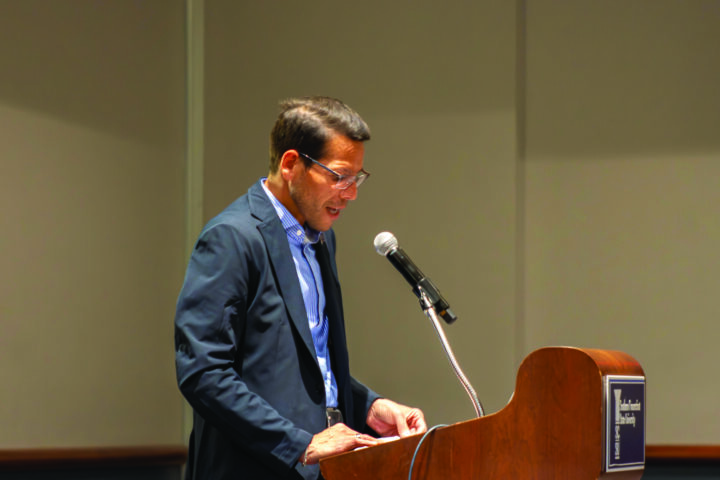
“Sustainability means going forward with all different kinds of development in a way that is going to preserve life and dignity for all mortal creatures on the planet,” Chelsea Harry, an event organizer and a philosophy professor said.
Speakers discussed topics ranging from climate change and overconsumption to artificial intelligence and the responsibility individuals have to contribute to a more sustainable future.
Harry said western lifestyles often depend heavily on consumption, including buying clothes, driving cars, eating meat and using large amounts of energy and heavy pollution.
While unwanted clothing from western countries can end up being discarded overseas. Harry said looking at these consequences requires people to consider how their everyday purchases affect communities far beyond their own.
“Those of us living in western nation often need to decide to change the way that were living, our cultures are centered around consumption to a large degree,” Harry said.
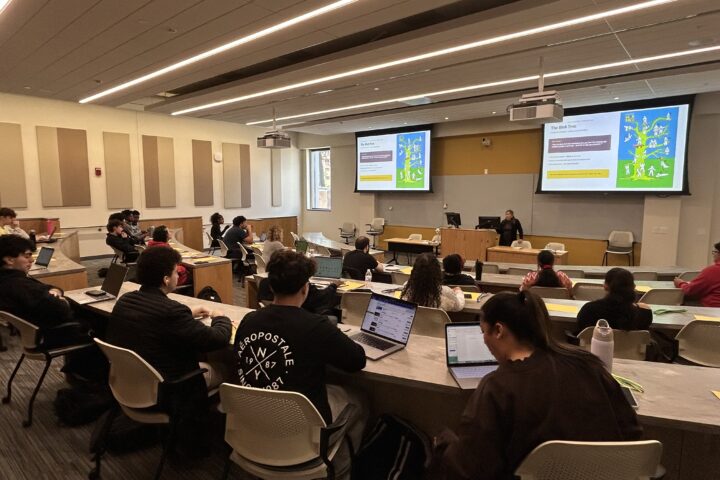
Harry discusses Aristotle’s Philosophy of Education for Humans and the development of ideas. She believes critical thinking is important for students on campus and with the rise of AI it can cause challenges for students to use their own human capability to think on their own.
“When you’re asking AI to think for you, you’re taking away what Aristotle says is your most human ability. And that’s to think, and more importantly, to think in terms of acting ethically,” Harry said.
Harry encourages students to use the practice of Aristotle’s philosophy in their everyday life by thinking ethically and critically.
She believes it starts at home in families and is a practice that needs to continue for students to flourish in education.
“In our families we have to start learning how to use our minds to think critically, to think ethically, we should be educated in this way by the time were adults if we’ve practiced enough and learned enough, we could become ethical citizens,” Harry said.
For students, Harry said sustainability does not necessarily require completely changing their lifestyles overnight. Instead, small changes can make a difference, such as buying less fast fashion, eating less meat, walking when possible, carpooling or reducing unnecessary energy use.
“I don’t want anyone to think, ‘I can’t stop completely’, therefore, I can’t help If you can’t stop completely, just do your best because everything counts,” Harry said.
“The real problem is self-centeredness and Western exceptionalism thinking that we should be able to do whatever we want and it doesn’t matter that it’s having an effect on someone else somewhere else,” Harry said.
“Climate Week” ultimately presented sustainability as a collective responsibility rather than an issue that can be solved by individuals alone. Harry ask a simple question about what small changes can done.
“What small changes could you make in you life to make a difference in someone else’s life,” Harry said.