By Jay’Mi Vazquez
Managing Editor
I still remember the sound of LEGO bricks spilling onto the carpet; that unmistakable rattle that meant an afternoon of building lay ahead.
For me, LEGO was never about value or scarcity; it was about imagination. But as I am watching today’s market, I cannot help feeling that something fundamental has shifted.
Over the past decade, sealed LEGO sets have morphed into unlikely investment vehicles.
I have seen sets that once retailed for modest sums resell for multiples of their original price simply because they were kept unopened.
Entire online communities now track retirement dates, production runs and aftermarket trends with the precision of stock analysts.
When I scroll through resale sites and see prices rivaling luxury goods, I find myself wondering when play quietly turned into portfolio management.
The phenomenon extends beyond full sets. Some of the most astonishing numbers are attached to vintage minifigures.
Seeing the prices on some rare figures makes me regret how often I would toss those tiny plastic characters into shoeboxes without a second thought.
I cannot help but laugh when I think about the pirate captain or classic spaceman I might have lost under a couch decades ago.
Today, certain rare minifigures sell for hundreds, even thousands of dollars. What once felt disposable has become highly prized.
On one level, the economics make sense. LEGO retires sets, meaning the supply of new, sealed versions only shrinks over time.
I understand how scarcity, combined with nostalgia and a global resale market, drives up prices.
Adults who grew up building castles and spaceships now have disposable income and a desire to reconnect with their childhood. I count myself among them.
There is something powerful about holding a box from decades past, knowing it represents a simpler time.
But I also feel heavily conflicted. When I hear parents debating whether their child should open a new LEGO set or keep it sealed “for the future,” I worry. I worry that people are teaching kids to treat toys as assets first and experiences second.
LEGO was designed to be built, dismantled and rebuilt. I have always believed its magic lies in the act of construction, not in the preservation of cardboard packaging.
However, I do not blame collectors entirely. I understand the thrill of the hunt and the satisfaction of owning something rare. I have felt the temptation myself, debating if I should buy two of a desirable set: one to build, one to stash away.
The fact that this thought even occurs to me says something about how normalized the investment mindset has become.
What troubles me most is not that LEGO has value, but that monetary value increasingly overshadows imaginative value.
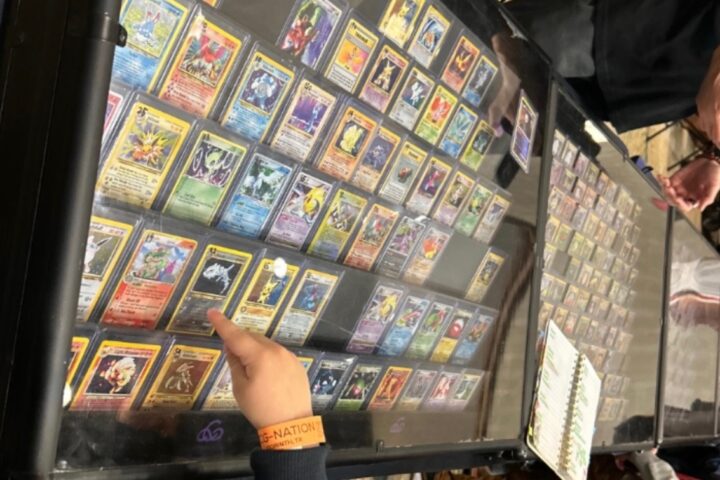
When sealed sets are displayed like museum pieces and minifigures are graded like trading cards, I sometimes wonder whether people are truly missing the point of the product.
Still, I do not think the answer is to dismiss the collector market outright.
For many, collecting is a form of appreciation, even preservation. And I have to admit, something is fascinating about how a simple interlocking brick has achieved cultural and financial significance on a global scale.
But if you ask me, the true value of LEGO cannot be measured in resale charts or auction bids.
It should be measured in the hours spent building something from nothing, in the frustration of collapsed towers and in the happiness of seeing a finished creation.
In the end, I hope people remember that LEGO bricks are meant to be clicked together, not just accumulate value.