By: Emma DeFelice
Contributor
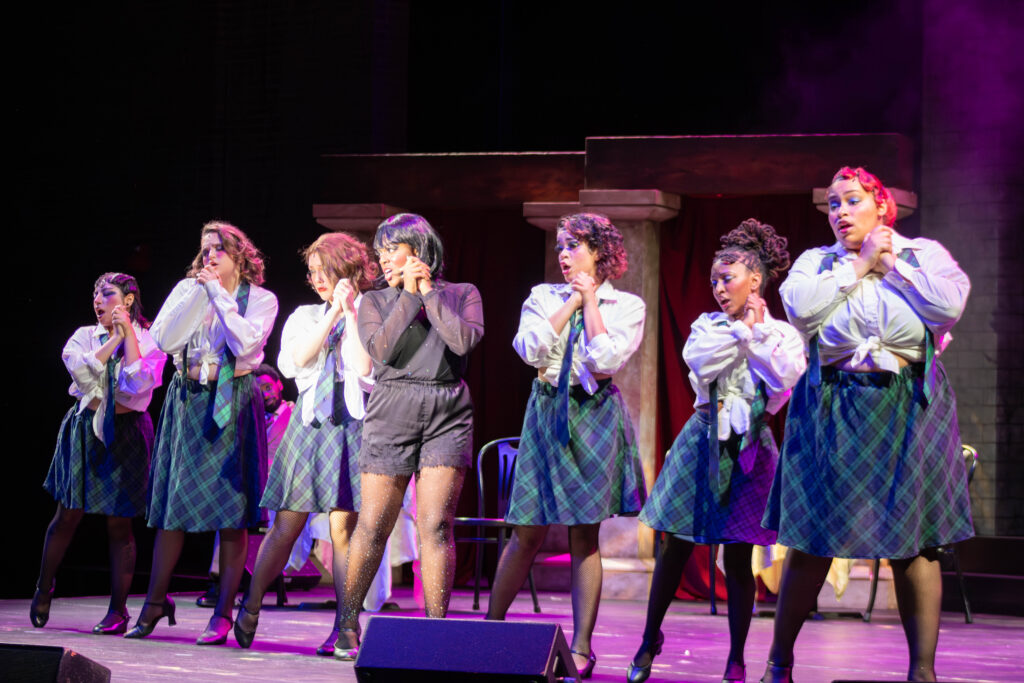
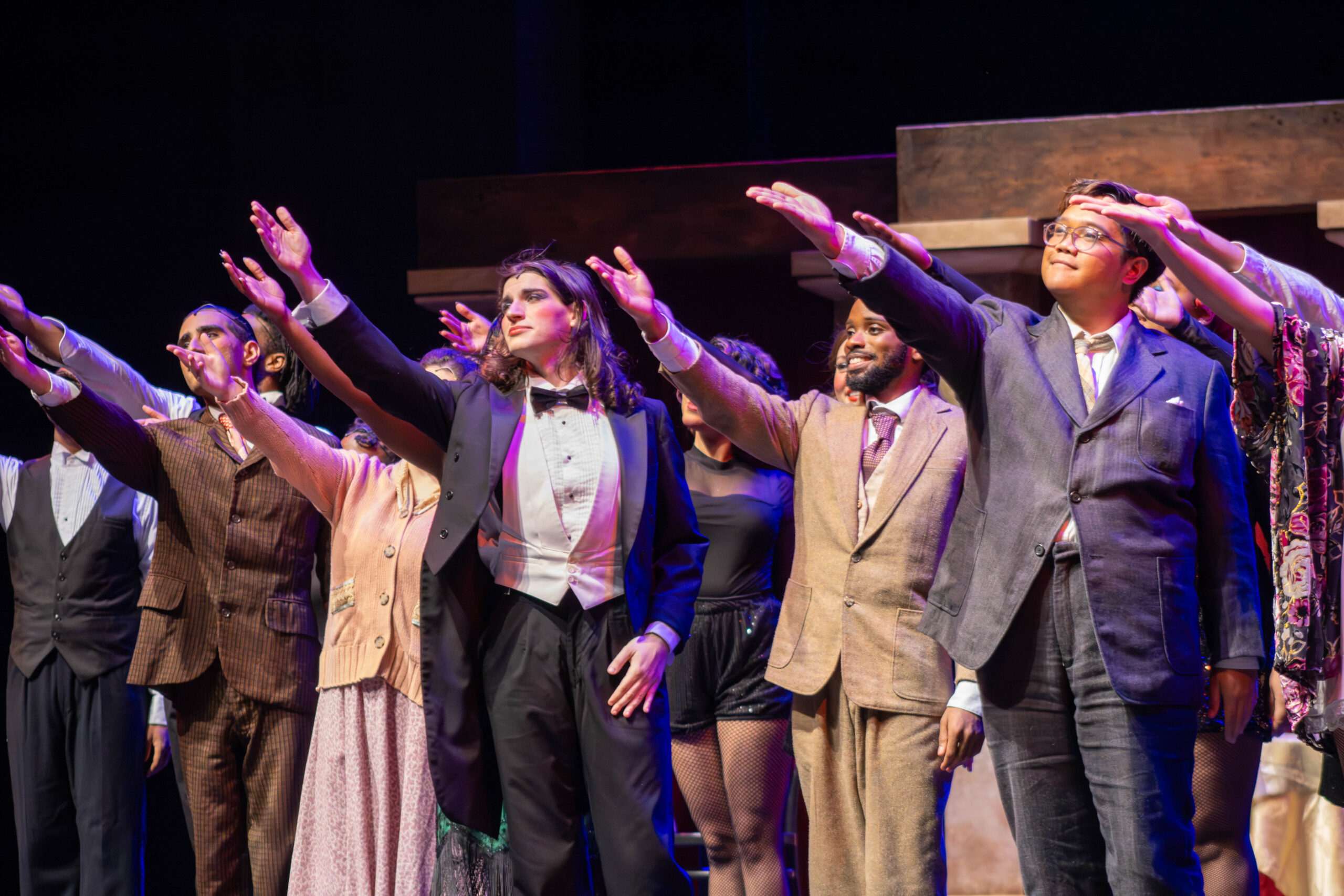
For their Fall 2026 musical production, the Crescent Players, a student-run theater organization, performed “Cabaret.”
The musical is set in 1929 – 1930 Berlin, amid the twilight of the Jazz Age and the tumultuous rise of Nazi power. It follows the Kit Kat Klub and American writer Clifford Bradshaw, played by theater major Trey Griggs, a senior, and his relations with Sally Bowles played by music major Aliza Clark, a sophomore.
“This specific year was the right moment for Southern to stage this production because there are parallels between ‘Cabaret’ and today’s world,” Griggs said. “Right-wing nationalists in Germany did not view Jewish people as Germans, just like how right-wingers in the United States don’t view documented or undocumented immigrants as American.”
“Cabaret” serves less as a historical artifact and more as a stark, urgent mirror reflecting our contemporary political landscape.
The musical captures a culture distracted by self-indulgence and theater while authoritarianism quietly rewrites the rules around it, a dynamic that resonates deeply with modern political polarization and civic complacency.
For director Larry Nye, the show’s power lies in its sobering warning: the warning signs of 1929 are not confined to history books—they are a living reflection of the ideological fault lines and silent complacencies shaping today’s world.
At the heart of “Cabaret” lies the Kit Kat Klub, a glittering oasis of nightlife and party culture designed to drown out the noise of a collapsing political world.
Music major Jade McGovern, a senior, who steps into the iconic role of the emcee, sees a direct line between the clubgoers of 1929 Berlin and her own generation’s coping strategies.
“More and more I find it more difficult to discuss politics even among those I agree with,” McGovern said. “I feel like I and many of my peers cope with this reality by finding escapism in all sorts of vices; partying, drinking, smoking, doomscrolling… they’re all just ways of numbing our brain a little bit.”
By holding up the emcee’s world as a mirror to modern life, the production offered a quiet warning: the temptation to retreat into distraction, whether onto a dance floor or behind a smartphone screen, can leave a society dangerously oblivious to the shifting world outside.
The theme of escapism offers a much-needed breather when the real world feels like too much, but Cabaret makes it clear that looking away only leaves the door open for the worst to happen.
Beyond the explicit rise of extremism, Cabaret delivers a quieter, sharper warning about the dangers of sitting on the sidelines.
While Generation Z has earned a reputation for using social media as an unvarnished platform for advocacy, that constant noise can just as easily breed a comfortable kind of numbness.
“What I’ve noticed specifically about Gen Z is how vocal we are about problems we feel are right and wrong,” Clark said. “With this, also comes people who feel they can simply tune out politics from their lives.”
Silence is compliance, why is why it is crucial for people to use their voices to speak out about what is going on around them, regardless of whether it impacts them or not.