By Valentina Toro
Features Editor
Political discussion is gaining new ground at the university, where a newly formed Communist Club is drawing student interest and promoting conversations about class, labor and socialist theory.
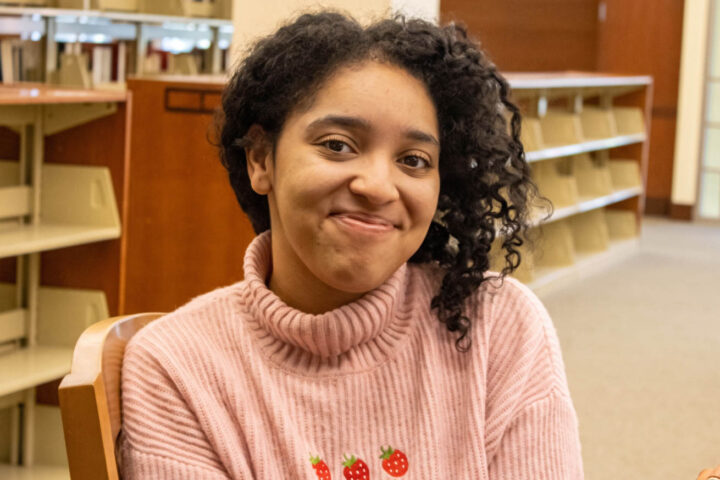
Psychology major Tatum Kerr, a junior and the president of Communist Club, said the club was created in response to what they see as limited political engagement on campus.
“I think that, in general, there was a low level of political involvement and just political ideas on campus,” Kerr said. “Wanting to expand party efforts at Southern and also just to raise the political level of the campus really inspired me to start the club.”
The Communist Club meets weekly to discuss political theory, labor issues and organizing strategies. The club positions itself as both an educational and organizing space.
Meetings include discussions of Marxist theory, current events and what members of the club describe as class consciousness: awareness of how economic class shapes social and political life.
According to Kerr, one of the club’s goals is to make conversations about communism more accessible and less intimidating for students who may only know the term through stereotypes or Cold War history.
“Students and people in general have very polarized ideas about communism,” Kerr said.
The club aims to make students feel more comfortable asking questions and challenging assumptions rather than avoiding the topic altogether.
The university student population, Kerr said, makes the campus a meaningful place for those conversations. Unlike elite private universities nearby, they described the university as serving many students from working-class backgrounds who will soon enter the workforce after graduation.
“We’re in New Haven, but we’re not Yale. A lot of students here will be workers,” Kerr said. “I think that’s a great way to benefit people.”
Beyond discussion, the club is structured around political preparation and organizing, Kerr said. Meetings focus on theory, current events and building class awareness among students.
“We want to have people prepared for that,” Kerr said. Organizers say the club is intended to function as an open forum rather than a closed political circle.
Their meetings are designed to introduce concepts, encourage questions and allow students with different levels of familiarity to participate in the discussions, even if they are encountering the ideas for the first time.
Members said the club hopes that even students who do not join will leave meetings with a stronger understanding of socialist theory and labor perspectives. Increased political literacy, they said, can influence how graduates understand workplace dynamics and economic systems.
Club meetings are structured around group discussion and topical prompts. Organizers encourage debate and leaders said participation ranges from committed members to curious first-time visitors.
The club’s stated mission goes beyond discussion alone. Kerr said organizers want to build long-term engagement and readiness for political action if largescale labor movements or strikes occur in the future.
“The mission of the club is to educate, organize and recruit dedicated revolutionaries,” Kerr said.